


Dehydrated Cannabis
Why Dehydrated Cannabis?
Cannabis has always been closely tied to the process of dehydration. Long before modern cultivation facilities and controlled environments existed, growers were already hanging and drying harvested plants to preserve them for later use. Today, while the industry has evolved dramatically, the principle remains much the same: fresh cannabis contains a high level of moisture, and without properly removing that moisture, the product becomes unstable, highly perishable, and vulnerable to mould, spoilage, and quality loss.
At the same time, cannabis is also a product where quality can change quickly depending on how it’s handled after harvest. Aroma, flavour, texture, colour, and overall product consistency are all heavily influenced during the drying stage, dry too quickly, and the flower can become harsh, brittle, and lacking in character; dry too slowly, and excess moisture can create the perfect environment for mould and degradation - so getting the balance right is where controlled dehydration becomes incredibly valuable.
Compared to traditional air drying alone, dehydrating cannabis allows for greater consistency and control across the entire process. Stable airflow and carefully managed temperatures help reduce moisture more evenly while protecting delicate terpenes - the naturally occurring compounds responsible for many of cannabis’ distinctive aromas and flavour profiles. Citrus, pine, floral, earthy, herbal, sweet, spicy; much of what people associate with premium cannabis is shaped and preserved during dehydration.
Beyond dried flower itself, dehydration also plays an important role in the wider cannabis and hemp industries. Trim, leaves, small buds, and excess harvest material can all be repurposed into powders, infused oils, edible ingredients, teas, wellness products, extracts, and topical applications. In commercial settings, the ability to reduce waste and create additional product streams from leftover plant material can significantly improve efficiency and profitability.
In Europe, particularly, where hemp and cannabis production continue to expand across wellness, food, CBD, and commercial markets, consistency has become increasingly important. Producers are no longer simply focused on preserving the product; they’re also focused on preserving quality, aroma, appearance, and shelf stability at scale.
Some of the main reasons people choose to dehydrate cannabis include:
- Preservation – Removing excess moisture helps extend shelf life while reducing the risk of spoilage, mould, and product degradation.
- Quality control – Controlled dehydration allows for more consistent drying conditions, helping preserve aroma, flavour, texture, and appearance across each batch.
- Terpene preservation – Low-temperature drying helps protect the delicate compounds responsible for many of cannabis’ distinctive aromas and flavour characteristics.
- Reducing waste – Excess flowers, trim, leaves, and surplus harvest material can all be repurposed into secondary products rather than discarded.
- Storage and handling – Once dehydrated, cannabis becomes easier to store, transport, and manage over longer periods.
- Commercial efficiency – Controlled drying environments can help streamline production, improve consistency, and reduce losses in larger-scale operations.
- Versatility – Cannabis can be dehydrated and used in multiple forms, including dried flower, powders, teas, infused products, edible ingredients, and extracts.
- Preparation for infusions and edibles – Dehydration creates a more stable base for oils, butters, tinctures, powders, and infused food products.
- Hemp and wellness production – Dehydrated hemp materials are widely used throughout herbal teas, wellness products, functional foods, and CBD-based applications.
- Shelf stability – Properly dehydrated cannabis products maintain their quality far longer when stored under the right conditions.
Cannabis is one of those products where the drying stage can completely shape the final result. A carefully controlled dehydration process helps preserve the characteristics growers and producers work hard to achieve throughout cultivation, while also creating a product that’s more stable, easier to store, and far more versatile.
With the right preparation and the right equipment, cannabis can be dehydrated consistently and efficiently across both small and large-scale production. From premium flower and hemp tea products through to infused ingredients and commercial wellness applications, having greater control over moisture, airflow, and drying conditions plays a major role in producing a high-quality final product.
BEFORE YOU START: PREPARING CANNABIS FOR DEHYDRATION
Before cannabis goes anywhere near the dehydrator, there are a few things worth understanding first, particularly around preparation, airflow, temperature, and the type of end product you’re trying to create. Unlike some dehydrated ingredients that are fairly forgiving, cannabis responds quite noticeably to changes in drying conditions, and small adjustments throughout the process can have a significant impact on the final result.
One of the first things to consider is the condition of the plant material itself. Freshly harvested cannabis can vary heavily in moisture content depending on the strain, growing environment, harvest timing, and trimming process. Dense flowers naturally retain more internal moisture than leaves or trim, so different parts of the plant often dry at different rates. Separating flowers, leaves, and trim before dehydration generally creates a far more even and manageable drying process, particularly when working across larger batches.
Preparation also plays a major role in consistency, and any excess stems, damaged flowers, wet spots, or plant material showing signs of mould should always be removed prior to dehydration. As with all dehydrated products, proper spacing across trays is equally important, allowing air to circulate freely around the product rather than trapping moisture between tightly packed material. Overcrowding trays might seem like a time saver, but it often leads to uneven drying and inconsistent moisture levels throughout the batch.
Temperature selection is another area where cannabis differs slightly from many other dehydrated products, like dehydrated fruit, seafood, or meat. Higher temperatures may speed up the process, but they can also dull the aroma and affect the overall quality of the finished product. Many cannabis and hemp producers instead prefer lower drying temperatures and steady airflow, which helps preserve more of the plant’s natural aromatic profile while still reducing moisture to a stable level suitable for storage or further processing.
The intended use of the dehydrated cannabis also influences how far the product is dried. Flower intended for curing and storage generally retains slightly more moisture than cannabis being processed into powders, teas, edible ingredients, or extracts, whereas products destined for infusions and commercial manufacturing often require a drier finish to improve shelf stability and processing consistency later on.
For commercial cannabis businesses, consistency is one of the biggest challenges throughout post-harvest processing. Traditional drying spaces can vary significantly with seasonal humidity, outdoor temperatures, and airflow conditions, making it difficult to achieve consistent results from one batch to the next. Controlled dehydration systems, such as our units at Benchfoods Dehydrators, help stabilise those variables, giving producers greater control over drying conditions while improving workflow efficiency and reducing product losses.
This becomes particularly useful when processing larger harvest volumes or secondary cannabis products like trim, leaves, and hemp materials. Instead of rushing to process fresh products immediately, dehydrating cannabis allows producers to create more stable ingredients that can later be used throughout oils, powders, teas, wellness products, edible applications, and extracts.
At BenchFoods Dehydrators, our units are designed to provide controlled airflow and precise temperature control across a wide range of drying applications, including delicate products such as cannabis and hemp. The stainless steel, food-grade construction and scalable tray systems of each unit make them suitable for drying flowers, trim, leaves, powders, teas, and infused ingredients with greater consistency across both small- and commercial-scale production.
It’s also important to understand the difference between dehydration and decarboxylation, as the two are often confused. Dehydration removes moisture from plant material to improve stability and shelf life, while decarboxylation involves heating cannabis at controlled temperatures to activate cannabinoids for products such as oils, tinctures, edibles, and infused ingredients. Depending on the intended application, some products may require both processes, while others may require only dehydration.
Spending a little more time on prep before drying begins usually pays off later in the process, with cleaner trimming, better airflow, stable temperatures, and properly separated batches all contributing to a more reliable final product that’s easier to store, process, and work with moving forward.
DIFFERENT TYPES OF DEHYDRATED CANNABIS
So, what types of cannabis and hemp products can you dehydrate, and where does each one fit? Below, we break down the main categories and highlight how they’re commonly used, along with the benefits each brings once dehydrated.
Dehydrated Cannabis Flower
Cannabis flower is still the most widely recognised and commonly dehydrated part of the plant, particularly across CBD, wellness, hemp, and commercial cannabis markets throughout Europe. Once properly dried, the flower becomes far more stable to store, package, transport, and process, while still retaining the aroma, appearance, and flavour characteristics that make different strains varieties unique in the first place.
Compared to leaves or trim, the flower naturally holds a much higher level of internal moisture, particularly within larger, denser buds. That moisture is one of the main reasons freshly harvested cannabis can deteriorate quickly if not dried correctly, as trapped moisture creates the ideal environment for mould, spoilage, and quality loss. Controlled dehydration helps remove moisture more evenly while protecting the flower's structure and overall quality, particularly when working with larger harvests or commercial production volumes.
The drying stage also has a major influence on the final aroma and flavour profile of cannabis flower. Many strains naturally carry strong citrus, floral, pine, earthy, herbal, sweet, diesel, or spicy notes, much of which comes from delicate terpene compounds found throughout the plant. Poor drying conditions or excessive heat can quickly flatten those characteristics, leaving the flower dull, overly dry, or lacking much of its original aroma. Controlled dehydration helps preserve more of those strain-specific characteristics while creating a cleaner, more stable final product for storage and processing.
There’s also a noticeable price difference between buying finished cannabis flower products and processing your own. Across Europe, packaged CBD flower and hemp flower products are commonly sold in small quantities at premium prices, particularly within wellness and specialty retail spaces.
- Pre-packaged CBD flower products (1–3 g retail packs) = approximately €10.00–€40.00+, depending on strain and quality.
- Fresh hemp or CBD flower purchased in bulk from growers or suppliers = significantly lower cost per gram when processed independently.
For commercial growers and processors, dehydration also creates far more flexibility around inventory management, product development, and secondary product streams. Dehydrated cannabis flower can be sold directly, used within pre-roll production, processed into extracts, infused into oils, or repurposed into powders and edible ingredients, depending on the quality and intended end use.
Below are some of the most common types of cannabis flower used throughout dehydration and commercial cannabis processing.
-

1.WHOLE FLOWER BUDS
Whole flower buds are generally considered the premium end of dehydrated cannabis products, particularly within retail flower and craft cannabis markets. Appearance plays a major role here, so maintaining the structure, colour, trichome coverage, and overall presentation of the bud becomes just as important as reducing moisture levels. Larger buds naturally hold more internal moisture, which means they benefit from slower, more controlled dehydration to help avoid the outside drying too quickly while moisture remains trapped deeper within the flower.
When properly dehydrated, whole flower buds retain much of their natural aroma, flavour profile, and resin characteristics while becoming far more stable for storage and transport. Texture also changes noticeably during the process, shifting from soft and freshly harvested to firmer and lighter while still holding enough moisture to avoid becoming brittle or harsh. Because so much of the flower’s terpene profile is shaped during drying, stable airflow and lower temperatures are often preferred to help preserve those citrus, floral, pine, earthy, and herbal notes associated with premium cannabis products.
Preparing whole flower buds for dehydration requires a fairly gentle approach. Excess fan leaves and larger stems are usually removed first, while keeping the bud's overall structure intact to preserve appearance and trichome coverage. Larger buds may also be lightly spaced or separated depending on density to improve airflow and encourage more even drying throughout the flower.
Ways to use dehydrated whole flower buds:
- Premium retail flower products
- Craft cannabis products
- CBD flower applications
- Long-term storage and curing
- Smoking and vaporising products
Because visual quality and aroma are such a major part of premium flower products, careful dehydration plays a huge role in preserving the characteristics that give whole buds their value in the first place.
-

2. POPCORN BUDS
Popcorn buds, often referred to as “smalls”, are smaller flowers that develop lower on the plant or separate naturally during trimming and handling. While they may not carry the same premium shelf appeal as larger buds, they still retain many of the same terpene and cannabinoid characteristics, making them highly useful throughout commercial cannabis processing.
Their smaller size and looser structure also allow them to dry faster and more evenly than dense, full-sized flowers, making them particularly practical for processing larger volumes. They’re commonly used throughout pre-roll production, infused products, extracts, and edible applications, especially where appearance matters less than flavour, aroma, and functionality.
Preparing popcorn buds for dehydration is generally quite simple. Most require only light trimming and stem removal before being spread evenly across trays. Because they dry faster than larger buds, keeping airflow consistent is important to avoid overdrying or creating brittle texture throughout smaller flowers.
Popcorn buds are commonly used for:
- Budget flower products
- Pre-roll production
- Cannabis infusions
- Edibles and extracts
- Bulk flower processing
While they may not be considered the “showpiece” part of the harvest, popcorn buds are one of the most versatile and commercially practical cannabis products to dehydrate and repurpose.
-

3. CBD FLOWERS
CBD flower has become one of the fastest-growing areas of the European hemp and wellness industries, particularly throughout markets focused on herbal blends, relaxation products, and low-THC cannabis alternatives. Many CBD strains naturally contain cannabinoids, terpenes, and flavonoids, which contribute to both their aroma and overall appeal within the wellness market. These compounds are responsible for the floral, citrus, earthy, pine, and herbal notes found in different strains and are one of the reasons CBD flower continues to grow in popularity throughout Europe.
Compared to freshly harvested flower, dehydrated CBD flower is significantly easier to package, transport, and store long-term. Properly dried flowers also create a far more stable product for retail sale while helping reduce spoilage issues caused by excess moisture during storage. Lower-temperature dehydration is commonly preferred here, particularly for terpene-heavy strains where aroma and flavour are a major part of the final product experience.
Preparation for CBD flower is often handled more delicately, particularly for flower intended for premium retail packaging or wellness applications. Gentle trimming helps preserve trichomes and visual quality, while careful spacing across trays improves airflow without flattening or damaging the flower during dehydration.
Ways to use dehydrated CBD flower:
- Wellness products
- Herbal smoking blends
- CBD retail flower
- Hemp tea products
- Infused wellness applications
As Europe’s CBD and hemp wellness markets continue to expand, carefully dehydrated CBD flower has become an increasingly valuable product across both retail and commercial production spaces.
-

4. HEMP FLOWER
Hemp flower has become increasingly common across Europe’s wellness, tea, food, and functional ingredient markets. While often associated with CBD production, dehydrated hemp flower is also widely used in herbal teas, powders, supplements, wellness blends, and infused food products. Naturally containing cannabinoids, terpenes, flavonoids, and other plant compounds, hemp flower has gained popularity among manufacturers and consumers seeking versatile, plant-based ingredients.
Its flavour profile can vary considerably depending on the variety, ranging from earthy and grassy through to floral, herbal, and lightly citrus-driven notes. Careful dehydration helps preserve these natural characteristics, making hemp flower well-suited to products where flavour and aroma play an important role alongside functionality.
Compared to some resin-heavy cannabis strains, hemp flower is often processed further after drying. Dehydration helps stabilise the material before it moves into grinding, extraction, infusion, or food manufacturing, creating a more consistent ingredient for downstream processing. Depending on the intended application, hemp flower may be dried lightly to retain its appearance and aroma for tea products or dried further for powders and extraction purposes.
Preparing hemp flower for dehydration often depends on the desired end use. Flowers intended for teas and wellness blends are usually kept more intact to preserve visual appeal and aroma, while material destined for powders or extraction can be broken down beforehand to improve airflow and drying consistency.
Ways to use dehydrated hemp flower:
- Hemp tea products
- Wellness blends
- Powders and supplements
- Functional food ingredients
- CBD extraction and processing
The versatility of dehydrated hemp flower has made it one of the more adaptable products within Europe’s growing hemp and functional wellness industries.


Dehydrated Cannabis Trim & Leaves
When people think about cannabis, the flower naturally gets most of the attention. It's the part of the plant that ends up on retail shelves, appears in product photography, and usually commands the highest price. But spend any time around commercial cannabis or hemp production, and you'll quickly realise there's a lot more value sitting in a harvest than just the flower itself.
Trim, leaves, and secondary plant material are produced in surprisingly large quantities during cultivation and processing and in the past, much of this material was discarded or treated as little more than waste. Today, that's changed considerably. As the cannabis, hemp, wellness, and functional food industries continue to grow across Europe, many producers are finding new ways to utilise every part of the plant, creating powders, teas, extracts, infused ingredients, wellness products, and supplements from material that may have previously been overlooked.
One of the biggest advantages of working with trim and leaves is efficiency. Compared to dense flowers, these parts of the plant generally contain less moisture and dry much faster, making them easier to process in larger volumes. They also lend themselves particularly well to secondary product manufacturing, where appearance matters less, and functionality becomes the priority.
From a commercial perspective, dehydrating trim and leaves can significantly improve the overall value of a harvest. Rather than relying solely on flower sales, producers can create additional revenue streams from material that would otherwise generate little return. For home growers, it simply offers another way to make the most of the plant and reduce unnecessary waste.
While trim and leaves may not always carry the same concentration of aromatic compounds found in premium flower, many still retain useful flavour, aroma, and processing potential. Below are some of the most common types of cannabis trim and leaf material that can be dehydrated, along with their benefits and most common applications.
-

1. SUGAR LEAVES
Sugar leaves are the small resin-coated leaves that grow around cannabis flowers and are often removed during trimming. While they may not carry the same value as premium flowers, they're far from waste. Because they sit so close to the bud, sugar leaves often retain many of the same aromatic compounds and characteristics as the strain they come from, making them a popular choice for a range of secondary cannabis products.
One of the biggest advantages of dehydrating sugar leaves is how easy they are to work with: their thin structure allows them to dry quickly and evenly while still retaining much of their flavour and aroma. Depending on the type, dehydrated sugar leaves may carry subtle citrus, pine, floral, earthy, herbal, or sweet notes, making them particularly useful in powders, extracts, infused products, and wellness applications.
Preparing sugar leaves for dehydration is relatively straightforward. Once separated during trimming, remove any larger stems or damaged material before spreading the leaves evenly across the dehydrator trays. Their lightweight structure means they generally require less drying time than dense flower buds and can be processed efficiently in larger quantities.
Ways to use dehydrated sugar leaves:
- Cannabis powders
- Infused oils
- Extract production
- Edible ingredients
- Wellness products
For growers looking to reduce waste while retaining value from the trimming process, sugar leaves are often one of the most useful by-products of the entire harvest.
-

2. FAN LEAF
Fan leaves are the larger leaves found throughout the cannabis plant and are often removed during pruning, harvesting, and trimming. While they contain fewer trichomes than flower or sugar leaves, they still have a range of applications once dehydrated.
Their relatively mild flavour profile makes them particularly useful for teas, powders, supplements, and wellness products where a more subtle cannabis or hemp character is preferred. Because they contain less resin, they are often easier to process in larger quantities and can be incorporated into a variety of functional products.
Preparing fan leaves usually involves removing larger stems and any damaged material before arranging them in a single layer across dehydrator trays. Their broad surface area allows them to dry quickly and evenly, making them one of the simplest cannabis materials to dehydrate.
Ways to use dehydrated fan leaves:
- Herbal teas
- Powdered ingredients
- Supplements
- Wellness blends
- Functional food products
While they may be one of the simplest parts of the plant, fan leaves offer an easy and practical way to extend the value of a harvest beyond the flower itself.
-
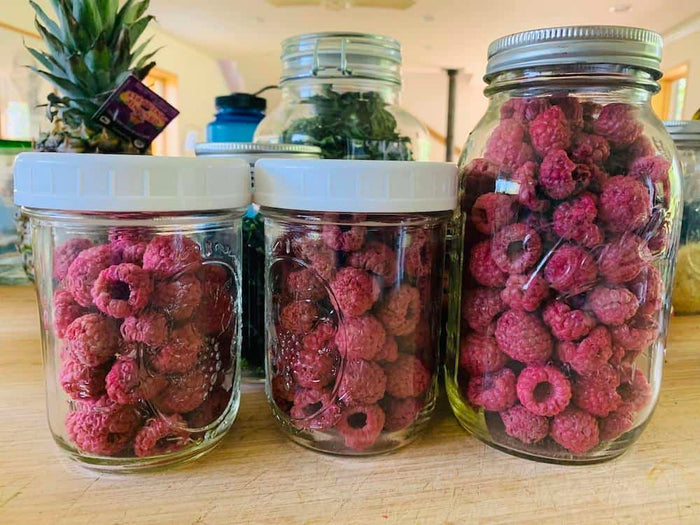
3. DEHYDRATED RASPBERRIES
That zesty, sweet flavour from fresh raspberries is just as present in the dehydrated version, making dehydrated raspberries a delicious snack on their own or great addition for both flavour and colour to various dishes. We recommend cutting raspberries in half prior to dehydrating, as this will speed up the dehydration process more than if they were dried whole.
Low in calories and rich in vitamin C, dehydrated raspberries are rich in antioxidants and minerals such as magnesium, potassium, copper and fibre and provide multiple health benefits to both the mind and body. The high levels of antioxidants in raspberries make them a powerful superfood that fights against disease and illness, as well as boosts brain function and memory. This makes dehydrated raspberries a great snack not just for adults but for the little ones in your life too, as they can provide nutrients that support learning and brain development. Other benefits of dehydrated raspberries include improving vision, reducing signs of ageing, controlling blood sugar levels and promoting healthy digestion.
Whilst we love munching on dehydrated raspberries as is, there are many wonderful ways you can enjoy them. See below for our suggestions.
- Use for baking cakes, muffins, cupcakes, cookies and granola bars.
- Add as a topping on morning cereals, oats, porridge and granola.
- Mix through pancake batter or use as a topping.
- Combine with other dried fruits or nuts.
- Blend into your smoothie.
- Stir through salads for a burst of flavour.
- Add to water or other drinks/cocktails for flavour or garnish.
-

4. DEHYDRATED BLACKBERRIES
Dehydrated blackberries are much like dehydrated raspberries in that they deliver a burst of flavour just like their fresh version and can be cut to make the dehydration process quicker. High in vitamins A, C and K and rich in antioxidants, dehydrated blackberries are super low in calories, fat and carbohydrates, making them a great choice for those who are looking to lose weight. They’re also high in fibre which promotes a feeling of fullness, therefore preventing unnecessary snacking on unhealthy processed foods, which can contribute to weight gain.
Other benefits of dehydrated blackberries include reducing cholesterol, assisting with digestion, supporting overall blood health, protecting the immune system, improving brain health and function, and producing collagen in the skin.
One thing to keep in mind when dehydrating both raspberries and blackberries is that they’re both filled with a heap of little seeds, which are very much still present in the dehydrated result. After enjoying the sweet, fleshy part of the berries, you’re left with the seeds, which are definitely more of a tart/bitter flavour. You will notice this more, of course, if you’re snacking on dehydrated blackberries on their own, but if you’re mixing them in various baked goodies or as a topping on breakfast dishes, it won’t be so obvious.
Some of our favourite ways to use dehydrated blackberries include:
- Add to salads for extra sweetness
- Use in various breakfast dishes, including pancakes and waffles or as a topping on oats, cereal and granola.
- Blend into smoothies.
- Use in baking cakes, muffins and cupcakes.
- Perfect as a drink or dessert garnish.
- Stir through yoghurt or ice cream.
-

5. DEHYDRATED CRANBERRIES
As with all other berries, cranberries need to be cut or have their skin broken prior to dehydrating to make their drying time more efficient and effective. Ensuring that berries are fully dried post-dehydrating will extend their shelf life from anywhere up to 1 year if stored in the pantry or 2 years if kept in the refrigerator, which is recommended for warmer and more humid climates (more on correct storage for dehydrated fruits later).
Dehydrated cranberries offer numerous health benefits, not just for adults but for children and young adults too. Rich in nutrients, vitamins and antioxidants, dehydrated cranberries have anti-inflammatory properties that support heart health and reduce the risk of chronic disease. Dehydrated cranberries also contain certain antioxidants that prevent bad bacteria from causing infections like UTIs, as well as improve oral hygiene by preventing harmful bacteria from sticking to gums and teeth. Other benefits include boosting collagen and hydration in the skin, supporting weight loss and assisting with digestion.
Discover some of our favourite ways to use dehydrated cranberries below.
- Mix with nuts and other dehydrated fruits to make a nutritious trail mix.
- Use in desserts such as various cakes, muffins and cookies.
- Use to make a variety of bread, muffins and scones.
- Make homemade granola by mixing dehydrated cranberries with oats, nuts and seeds.
- Add as a topping on morning oats, porridge or cereal.
- Sprinkle into salads.
-
Feeling inspired? Why not try some of our other nutritious berry suggestions below and create delicious, dehydrated berries to store and use all year round.
- Goji berries
- Inca berries
- Boysenberries
- Blackcurrants
- Acai berries


Dehydrated Stone Fruits
Stone fruits such as peaches, nectarines and mangoes are super juicy, full of flavour and a great option when it comes to creating dehydrated fruits. Whilst stone fruits are only in season during the warmer months in Europe think June through September you can buy them in bulk and enjoy their rich flavour and nutritional benefits all year if they’re dehydrated and stored correctly.
Dehydrating stone fruits is also an effective and smart way to get the most out of your fresh produce, as it won’t take long for them to turn and not be in their prime. When dehydrating stone fruits, the fruit should be cut in halves or quarters so the pit can be removed, but you can choose whether to remove or leave the skin on if you’ve chosen to leave the skin on, place the fruit skin side down on the dehydrator tray.
Another tip to ensure effective dehydration is to push on the curved or outside of the fruit inward pushing the flesh of the fruit forward, which will allow the fruit to dry quicker. Alternatively, cut the fruit into thin slices, and this will guarantee that the fruit will dehydrate evenly and even faster we prefer slicing where possible on larger fruits, but smaller stone fruits like apricots, plums and cherries can be kept in halves or quarters if desired.
To maintain the colour, it's important to pre-treat stone fruit, and this can be done by rinsing in salted water and draining and drying thoroughly before dehydrating (more on pre-treatment and conditioning later).
Pre-packed dehydrated apricots 400 g pouch (approx 8-12 slices) = €5.00
Apricots per kg @ EU Supermarket = €3.96
Pre-packed dehydrated peaches 200 g pouch (approx 15-20 slices) = €5.00
Peaches per kg @ EU Supermarket = €3.96
Pre-packed dehydrated mangoes 150 g pouch (approx 10-15 slices) = €6.00
Mangoes each @ EU Supermarket = €2.90
Dehydrated stone fruits can be used in a variety of ways and deliver a sweet, luscious flavour that makes for a delicious snack or tasty addition to any dish, both sweet and savoury. Think breakfast dishes like oats, porridge and granola, desserts such as puddings, cakes and pies, or savoury dishes including salads, meat dishes or charcuterie boards the ways to use dried stone fruit are endless!
As mentioned above in our berries section, you can also blend various stone fruits, either on their own or combined with other fruits, to create a delicious dehydrated fruit leather for the whole family to enjoy.
So, what are some of our go-to stone fruits for dehydrating? Check out our list below.
-
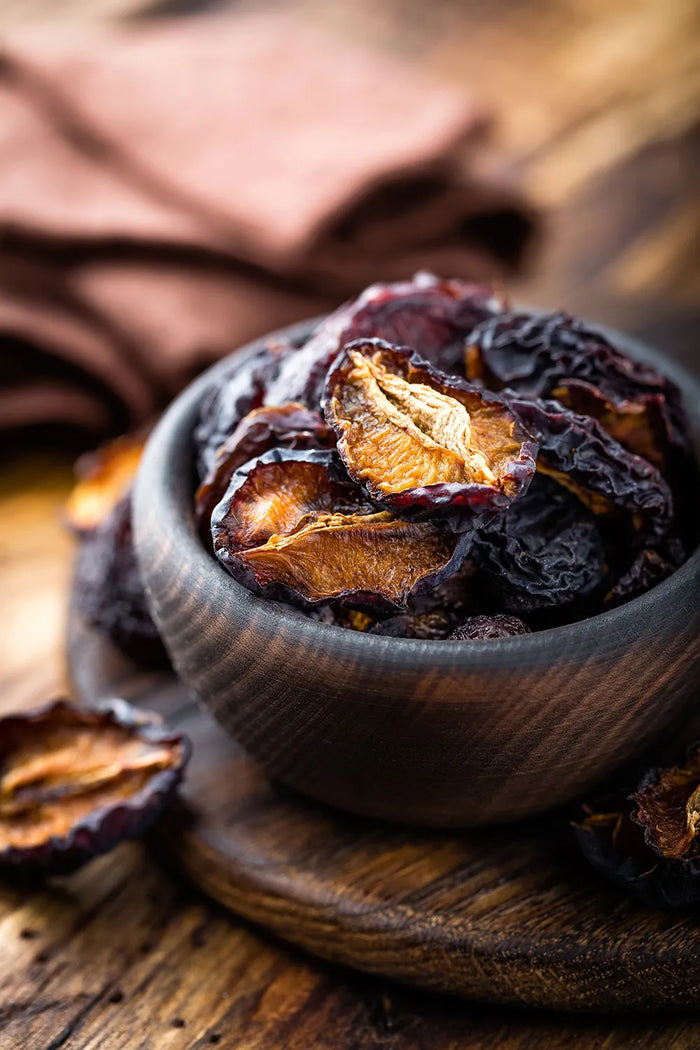
1. DEHYDRATED PLUMS
Firstly, to clear up any confusion, prunes are in fact, dehydrated plums. It should be said, however, that whilst all prunes are plums, not all plums can be made into prunes, and it’s usually the smaller, denser and less juicy varieties of plums that get turned into prunes.
Dehydrated plums or prunes deliver a super sweet flavour (more than fresh plums) derived from their concentrated content of natural sugars, so it’s important to be mindful of serving sizes and how many prunes you snack on throughout the day too many can also cause an upset tummy and regular toilet visits!). Whilst they may have more sugars and carbs, they also have a higher concentration of nutrients following the dehydration process. Dehydrated plums provide multiple benefits to our health and well-being and contain a rich source of antioxidants and nutrients, including fibre, magnesium and potassium, as well as vitamins A, K and several B vitamins. Dehydrated plums help to reduce inflammation, support digestion and healthy bowel movement, improve bone and heart health and reduce the risk of illness and disease.
With most plums, we recommend pitting and then either slicing or cutting them into chunks prior to dehydrating. If you have a smaller variety of plums, you can dehydrate them whole and leave the pit in, but you’ll need to blanch them first to break the skin to allow for more effective dehydration.
Dehydrated plums are a delicious snack on their own, but there are many ways to use them see below.
- Add chopped to cookies, cakes, muffins, scones or bread in replacement of raisins.
- Dip in chocolate for a sweet treat.
- Chop and mix with nuts and various other dehydrated fruits to create a trail mix.
- Use in a variety of meat dishes (chicken, pork or beef).
- Wrap in bacon for a delicious party favour.
-
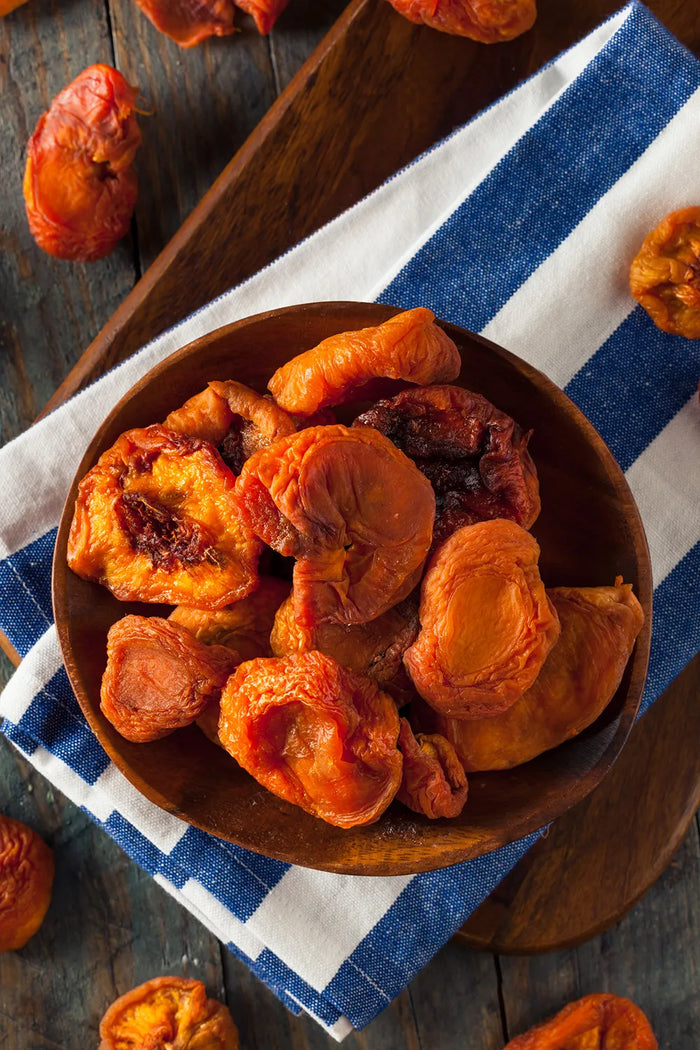
2. DEHYDRATED PEACHES
Juicy peaches are delicious when dehydrated, giving that burst of flavour to any dish or as a healthy snack. When choosing peaches to dehydrate, there are a couple of things to consider. The firmer the peach, the quicker it will take to dehydrate, however, because they’re not as ripe, you likely won’t get the same sweet flavour that you would from softer peaches. Choose peaches with good colouring, a strong sweet fragrance and that are slightly soft to the touch avoid peaches with any bruising or brown spots It’s completely up to you if you wish to remove the skin pre-dehydrating or keep the skin on, but the best way to do this is by blanching or gently using a peeler.
We recommend removing the pits by cutting the peach in quarters (they should pop out easily this way) and slicing the peaches evenly to ensure consistency when dehydrating. You can also choose to pre-treat the peaches prior to dehydrating to prevent a change of colour, as they can brown when exposed to heat (more on this later).
Dehydrated peaches provide a lot of nutritional benefits and are a great source of energy, making them a perfect snack for athletes or those who exercise frequently and when hiking or riding. Dehydrated peaches are packed with vitamins A, B, C and K and minerals including iron, copper and magnesium. They’re also high in potassium and low in sodium which supports optimal blood and heart health. Other health benefits of dehydrated peaches include protecting the immune system, strengthening bones, boosting skin and eye health and supporting digestive health.
Whilst dehydrated peaches are super delicious on their own, there are many ways you can use them in cooking to boost flavour. See our favourites below.
- Mix into a homemade trail mix.
- Use as topping on morning oats, cereal, porridge or yoghurt.
- Add to a cheese plate or charcuterie board.
- Mix through salads.
- Use in baked goods, including cakes, muffins, pies and scones.
- Perfect with chicken and pork dishes.
- Partners well with sweet potato and carrots.
-
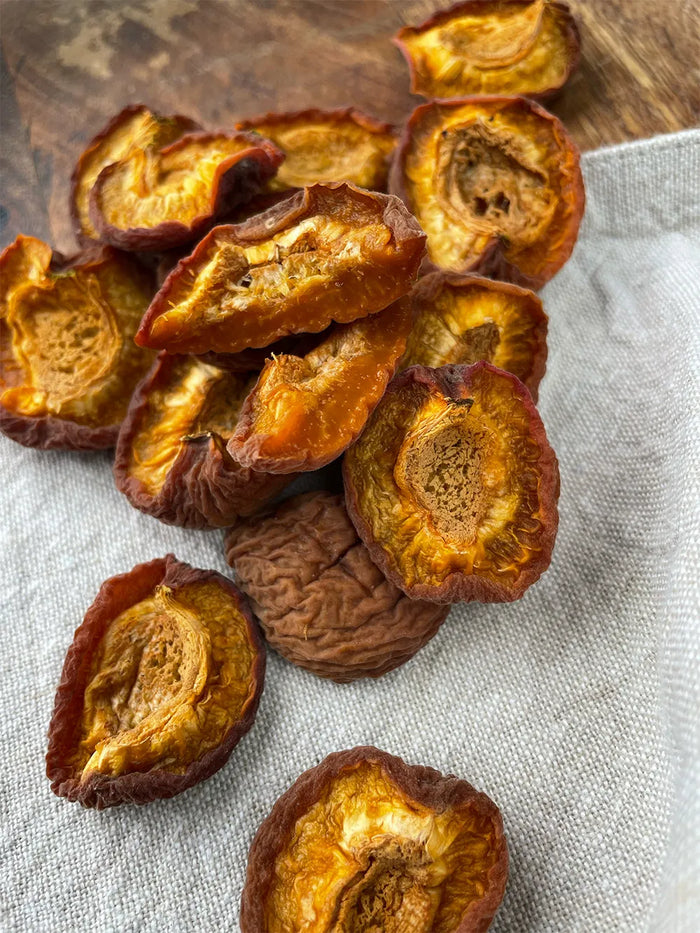
3. DEHYDRATED APRICOTS
Apricots are one of the most popular fruits found in dried fruit and nut mixes and are enjoyed as a sweet, healthy snack, but the benefit of dehydrating your own apricots over purchasing dried apricots is that they’re without the stacks of sugar you’ll likely find in the store-bought varieties. As with plums and peaches, choose apricots that have a little bit of give over the super firm, unripen ones, as these will deliver a sweeter flavour post-dehydration. To prep for dehydration, we recommend removing the pit and either halving or slicing, as suggested with peaches. If keeping in halves, push the back of the apricot inward so it exposes the flesh further, which will allow for a more effective and efficient dehydration process.
Dehydrated apricots are packed with so much goodness, making them undoubtedly one of nature's super-powerful superfoods! Rich in vitamins, minerals and antioxidants, dehydrated apricots and fat-free, low in calories and filled with flavour. A great source of fibre, potassium and vitamin A, dehydrated apricots help to lower blood sugar and cholesterol levels, boost brain function and memory, fight off illness and disease, strengthen bones and teeth and support weight control by keeping you feeling fuller for longer.
As mentioned, dehydrated apricots are a deliciously sweet snack, perfect for school lunchboxes or to keep in your handbag or office desk drawer. Here are some other ways you can enjoy them.
- Use for baking cakes, muffins, scones and various pies or pastries.
- Add to morning oats, granola, cereal, porridge and yoghurt.
- Dip in chocolate for a sweet party treat.
- Chop and sprinkle over desserts, ice cream or salads.
- Add to cheese boards.
- Mix with other dehydrated fruits and nuts to create a homemade trail mix.
- Use to make stuffing or in various meat dishes.
-
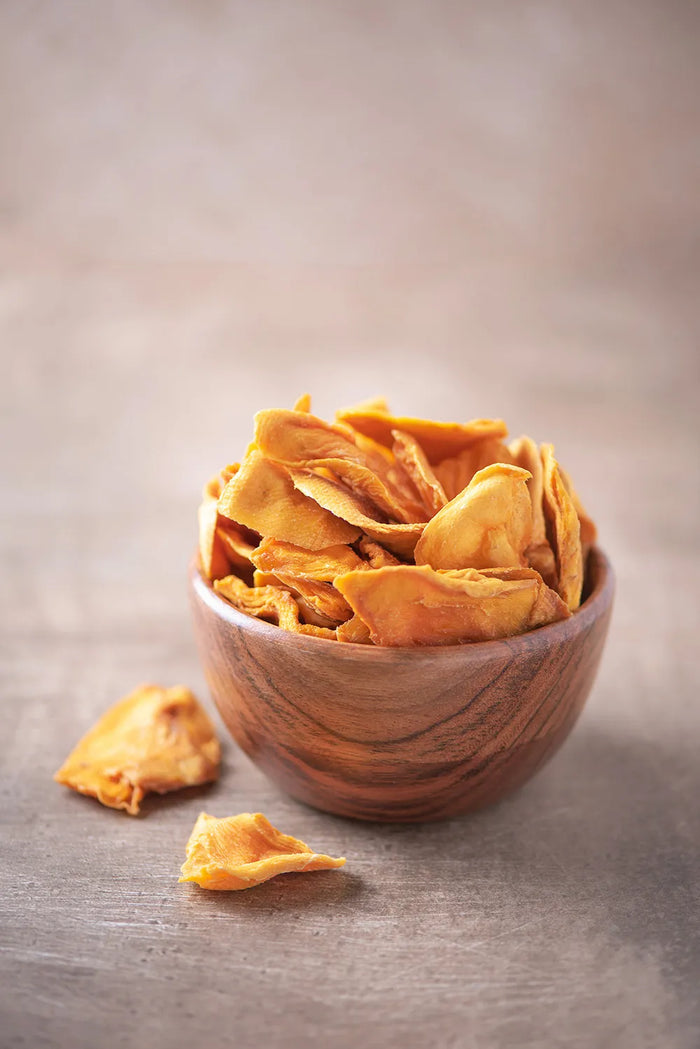
4. DEHYDRATED MANGOES
Mmmmm mangoes!! Is there a fruit that screams summer more than mangoes? The juicy, rich, sweet flavour of mangoes delivers a delicious treat and a high concentration of nutritional benefits when dehydrated, making it a favourite fruit to snack on or add to various dishes. Being that mangoes are seasonal in the warmer months, buying in bulk and dehydrating means you can store and enjoy them all year round!
Choose your mangoes for dehydrating the same way you would pick your other stone fruit they shouldn’t be too firm, slightly soft to the touch, but not overripe. With mangoes, you want to remove the pit and the skin, gently cutting the flesh off the pit and peeling back the skin with a small knife. Whilst you can cut thicker slices (which will take longer to dehydrate), we recommend cutting the fruit lengthways, just over ½ cm in width.
Like other dehydrated fruits, dehydrated mangoes offer a more concentrated source of benefits, however, they are high in natural sugars and calories, so it’s important to enjoy them in moderation to avoid high blood sugar or weight gain. Rich in antioxidants and vitamins A, B and C, dehydrated mangoes also contain folate, fibre, calcium, iron and potassium, which all deliver a tonne of benefits for both the mind and body. Some of these include improving eye health, boosting immunity, supporting digestive health, promoting healthy skin, increasing energy and reducing stress. Being high in fibre also means they will keep you feeling fuller for longer, therefore, preventing unnecessary snacking.
Some ways to enjoy delicious dehydrated mangoes? Check out our list below.
- Before dehydrating, sprinkle with chilli powder, lime juice and sea salt to make dehydrated chilli mango.
- Add to your morning smoothie.
- Use as a topping on yoghurt, cereal, desserts or ice cream.
- Chop and mix through salads.
- Use in baking cakes, muffins, cupcakes, cookies and scones.
- Make various chutneys, jams or sauces.
- Create energy balls or dip slices in chocolate and crushed pistachios for a sweet treat.
- Combine with pork and various meat dishes.
-

5. DEHYDRATED CHERRIES
Last on our list of favourite dehydrated stone fruits are dehydrated cherries. In Europe, cherry season peaks in the height of summer typically June through August and lasts only a short few months. Because fresh cherries have such a limited season and can be expensive, purchasing them in bulk when they’re more affordable and preserving them through dehydration allows you to enjoy their sweet flavour throughout the year.
Prior to dehydrating, discard any overly soft cherries we don’t want them overripe and remove the pit. Because cherries are rather small, de-pitting them can be a tedious task, but we recommend cutting them in half and then into quarters you can keep the stem in whilst cutting if this makes them easier to hold, then remove it before loading onto the dehydrating trays. Although whole cherries are delicious, cutting them ensures a faster drying time and a more even result. It may require a little more prep work, but will save you hours when dehydrating.
Dehydrated cherries provide many benefits and are a rich source of vitamins A, C and E, as well as minerals such as calcium and iron. They’re high in antioxidants which help to prevent illness and have anti-inflammatory and pain-relieving properties. They can assist in lowering cholesterol, improving digestion, and even supporting relaxation and better sleep.
As with other stone fruits, there are many ways to use dehydrated cherries to add flavour and fun.
-
There is an abundance of stone fruits that you can use to create delicious dehydrated treats to enjoy all year—see our other suggestions below.
- Nectarines
- Coconuts
- Dates
- Lychees

Other Dehydrated Fruits
So, we’ve covered citrus, berries and stone fruits, but what about all the other nutritious and delicious fruits that don’t fall into either of these three categories? With so much goodness, flavour and ways you can enjoy these dehydrated fruits either at home or if you’re running a bar, cafe or restaurant we had to share and add these to the list of favourites. Don’t forget to check out our quick cost comparison below too.
Pre-packed dehydrated banana slices 1 kg pouch = €41.00
Bananas each @ EU Supermarket = €0.81
Pre-packed dehydrated apple slices 200 g = €3.84
Apples per kg @ EU Supermarket (approx 5 apples) = €4.50 (€0.90 per apple)
Pre-packed dehydrated kiwi fruit 30 g = €10.95
Kiwi fruit @ EU Supermarket = 5 for €4.00
So, what are some of our other go-to fruits for dehydrating? Check out our list below.
-
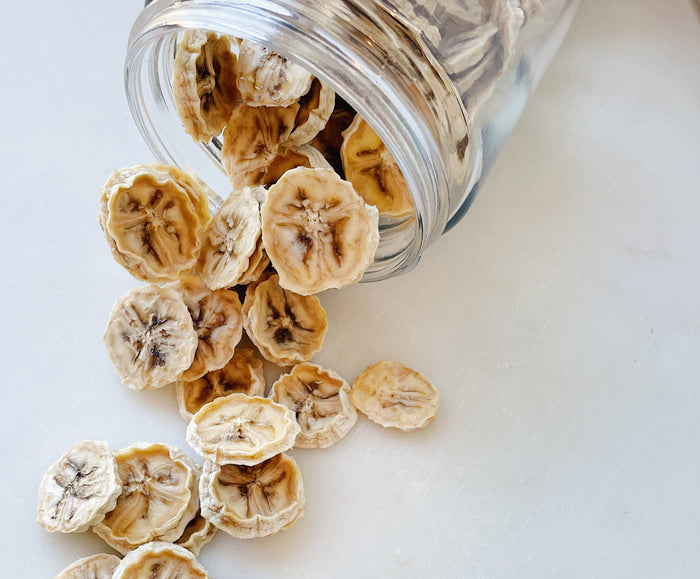
1. DEHYDRATED BANANAS
We all know how quickly bananas can turn bad, so if you’re not freezing them for smoothies or waiting for them to go super ripe for banana bread, then why not preserve them through dehydration preventing unnecessary food wastage and creating a healthy snack in the process.
If you’re buying bananas in bulk specifically for dehydrating, choose bananas that have slight brown speckling rather than overripe or bananas that are still too green. This will ensure you get maximum sweetness from your dehydrated banana chips. The prep for dehydrating bananas is super easy simply peel and slice bananas across, anywhere from just under ½ cm to just over. You can cut them in wedges, but slicing them this way will allow them to dry easier and faster.
Being that the water content is removed during dehydration, dehydrated bananas have a high concentration of nutrients. Rich in potassium, fibre, magnesium, iron, vitamin A and protein, dehydrated bananas are also high in antioxidants which boost immunity and improve mental well-being. Other benefits include supporting heart and blood health, increasing energy and endurance, promoting healthy digestion and maintaining healthy skin and bones.
Ways to enjoy dehydrated bananas? See below.
- Use as a topping for cereal, oats, porridge or yoghurt.
- Dip in yoghurt or peanut butter for added sweetness.
- Mix with nuts and other dried fruits for a healthy trail mix.
- Dust with cinnamon or sugar for added flavour.
- Use in cakes, muffins, banana bread or homemade bars.
-
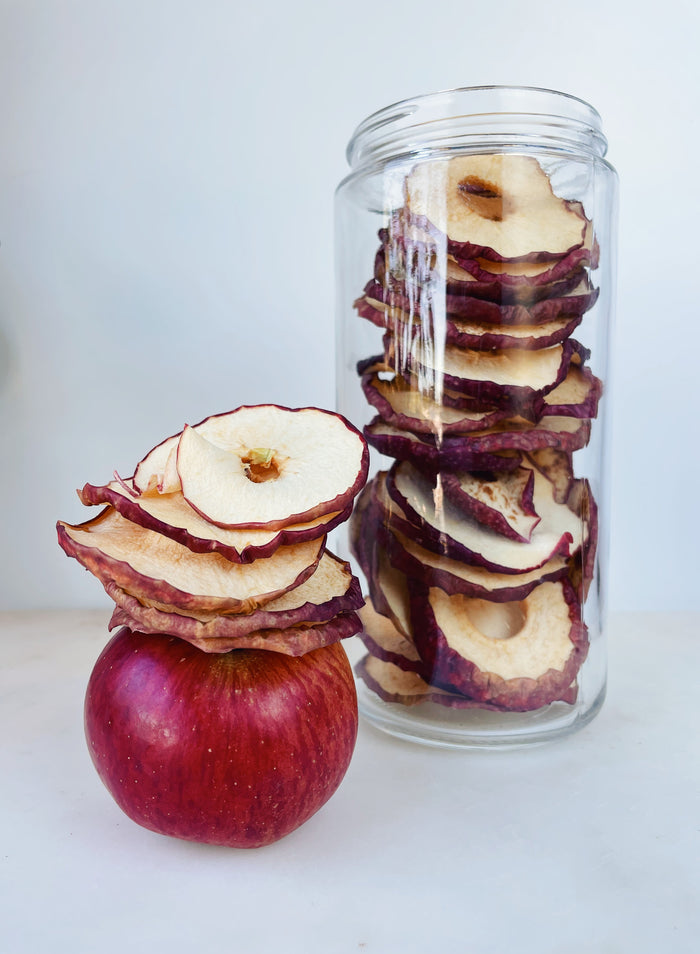
2. DEHYDRATED APPLES
Dehydrated apples provide a sweet, nutritious snack that’s perfect for the kids’ lunchboxes or in a variety of dishes. You can dehydrate apples, so they’re more crispy think dehydrated apple chips or take them out a little earlier for a chewy texture (still just as delicious!).
When apples are cut, it doesn’t take long for the flesh to discolour and turn brown this is called oxidation. Whilst this doesn’t affect the flavour or nutritional value of the fruit itself, you can pre-condition sliced apples in lemon juice prior to dehydrating to minimise the discolouration or get them in your dehydrator quickly after cutting, which will preserve the colour too. To prep for dehydration, cut in quarters to remove the core, then slice or cut into rings approximately ½ cm in thickness.
Dehydrated apples, like other fruits, have high levels of nutrients that provide a heap of health benefits. A rich source of vitamins and minerals, dehydrated apples contain vitamins A and C, along with high levels of B vitamins which boost metabolism and nourish the skin. Packed with fibre and potassium, dehydrated apples improve blood and digestive health, support mental focus and well-being and keep teeth and gums healthy. You know the saying an apple a day keeps the doctor away!
Whilst you can grab apples year-round in Europe, apple picking season typically runs from September through to October this makes it a perfect time to stock up when apples are in their prime and dehydrate them to enjoy their benefits throughout the year. Whether you’re dehydrating Red Delicious, Granny Smith or Pink Lady apples, they will all deliver a slight variance of flavour, but their sweet or tart taste will be intensified following dehydration.
As mentioned, dehydrated apples are a fantastic snack for kids and adults alike and can be used in a variety of ways to add flavour to dishes. See some of our suggestions below.
- Chop and add to mixed nuts or homemade trail mix.
- Dip in yoghurt or peanut butter as a snack.
- Add on top of oats, cereal, muesli, porridge or yoghurt.
- Use in baked goods like pies, bread, scones, muffins or cakes.
- Add as a garnish to hot drinks like a Hot Toddy, mulled wine or cider.
- Use in Christmas decorations or add to potpourri.
- Include on a cheese board.
-
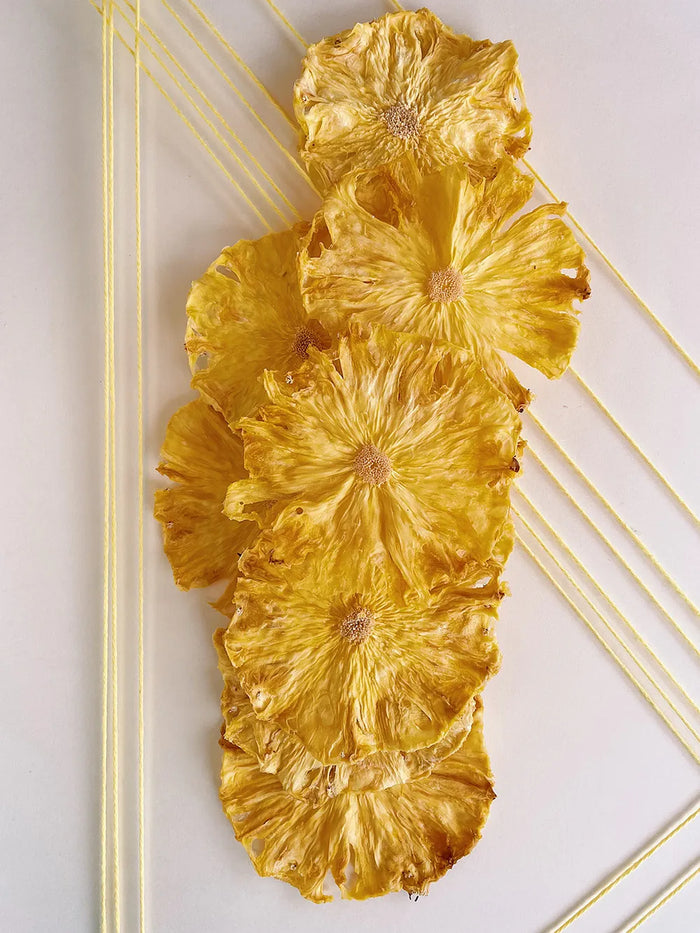
3. DEHYDRATED PINEAPPLE
No other fruit screams summer quite like juicy, fresh pineapple, and it’s one of our favourite fruits for dehydrating! In Europe, pineapple is imported and available all year round, but the peak season for enjoying the freshest fruit is from March through to July. When buying fresh pineapple, it’s recommended that you eat it within 2 days if kept at room temperature or no longer than a week if refrigerated. Tinned pineapple is also a great option if fresh isn’t available, offering convenience and consistent quality for dehydration.
Dehydrating pineapple not only maintains all that incredible, zesty, sweet flavour of fresh pineapple with minimal mess, but it also provides a much longer shelf life meaning you can enjoy it for months on end. To prepare pineapple for dehydration, remove all of the outer layer and core before cutting it into pieces or ring slices of anywhere between ½ cm thickness to 1 ¼ cm thickness keep in mind that the thinner the slice, the quicker it will take to dehydrate. Dehydrated pineapple will have a slightly chewy texture and is one of those fruits that consistently dehydrate well.
Dehydrated pineapple contains calcium, potassium, fibre and manganese as well as vitamins A, B and C, providing numerous health benefits to both the mind and body. Some of these benefits include increasing collagen levels in the skin, boosting the immune system, strengthening hair and bones, supporting gum and dental health, and assisting with digestion. Dehydrated pineapple also contains antioxidants, protecting the body against illness and disease.
Although super delicious and one of our favourite dehydrated fruits to enjoy on its own as a snack, there are many ways to enjoy dehydrated pineapple. See our suggestions.
- Add to breakfast dishes like oats, porridge, cereal and yoghurt.
- Combine with nuts and other fruits to add flavour to trail mix.
- Use in desserts such as puddings—delicious in rice pudding or chia seed pudding!
- Add to baked goods, including muffins, scones, cakes or cupcakes.
- Perfect in savoury dishes such as stir fries, curries, pork dishes or sweet and sour sauces.
- Add to herbal teas for extra sweetness or as a garnish for cocktails.
-
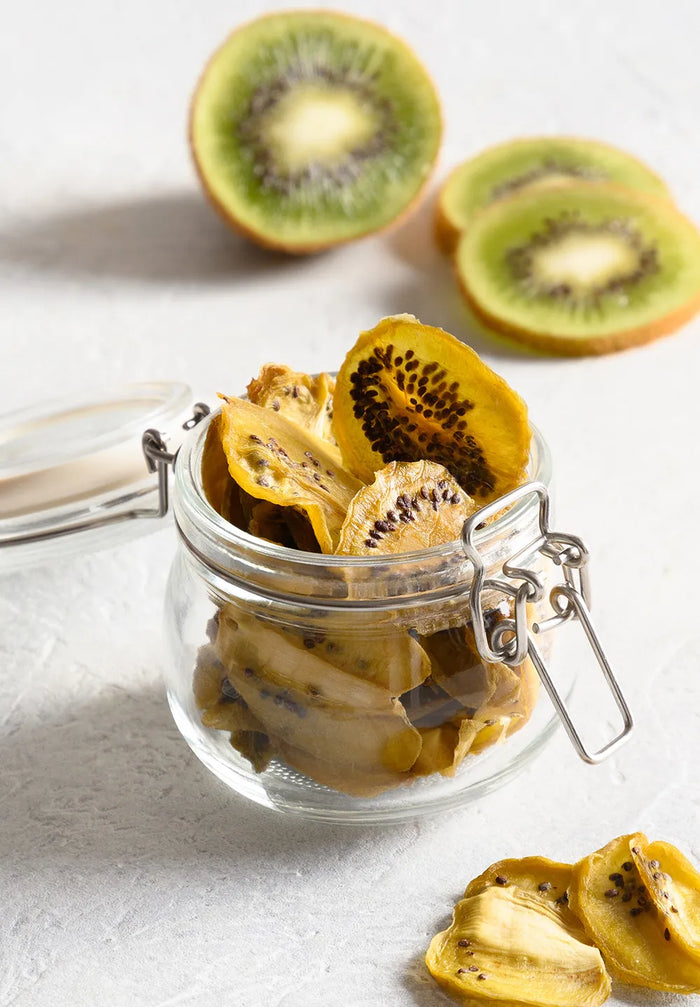
4. DEHYDRATED KIWI FRUIT
Kiwi fruit is one of the easiest fruits to dehydrate perfect if you’re a beginner or just dipping your toe in the dehydrating pool. Simple to prepare, you can peel off the skin if you wish or keep it on, but ensure you thoroughly wash the skin if you choose to do so (the skin is actually edible!). We recommend slicing at approximately ½ cm thickness to maintain efficient and effective dehydration, and the result should be a soft, chewy texture.
In Europe, kiwi fruit is in season from November through to May, making it the perfect time to stock up and dehydrate them when they’re at their peak, so you can enjoy their benefits all year round. Depending on which kiwi fruit you dehydrate, some will deliver a super sweet flavour, whilst others will be slightly sour and tart. Either way, both provide a delicious flavour, making them a perfect nutritious snack for the whole family.
High in vitamins, minerals and antioxidants and low in calories, kiwi fruit supports the immune system, boosts the skin’s appearance, strengthens hair and bones, and assists with weight management by reducing feelings of hunger. Dehydrated kiwi fruit also helps with digestion, lowers blood pressure, and can even assist with sleep and mental wellness.
There are many ways to enjoy dehydrated kiwi fruit some of our favourites are listed below.
- Sprinkle with sugar pre or post-dehydration to add sweetness to more sour kiwi fruit.
- Add as a topping to breakfast dishes such as oats, porridge and cereal.
- Use as topping on smoothie bowls for added crunch.
- Perfect as a cocktail or drink garnish.
- Add to water for a hint of flavour.
- Chop and stir through salads for a touch of sweetness.
- Use to decorate desserts or cakes.
-
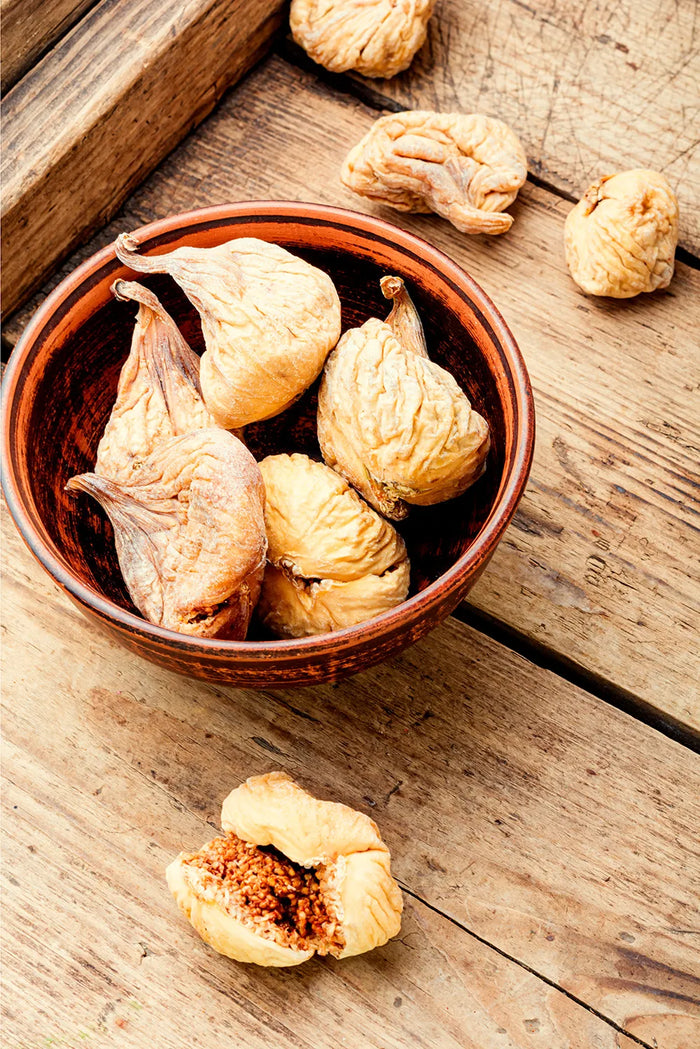
5. DEHYDRATED FIGS
Whilst fresh figs are only in season for a very short time in Europe (late summer to early autumn), dehydration allows you to preserve and enjoy them for much longer periods. When it comes to dehydrating figs, you can keep them whole or choose to half or quarter them, keeping in mind that when they’re cut, they will dry quicker and keep longer, as more moisture has been removed from the fruit. You can, of course, slice figs too, which ensures even faster and more effective dehydration and makes them a perfect lightweight snack or addition to breakfast dishes.
Dehydrated figs are rich in calcium, potassium and fibre and are packed with vitamins and antioxidants. Dehydrated figs help to improve digestion, boost the appearance of skin and hair, strengthen bones, improve mental focus, and protect the immune system. Being high in fibre and containing natural sweeteners, dehydrated figs can also support weight management by curbing hunger cravings and increasing feelings of fullness. It is important to be mindful, however, that dehydrated figs are more concentrated in calories and sugars, so should be enjoyed in moderation. That being said, they are perfect as a post-workout snack to replenish glycogen levels and support muscle recovery.
We all know figs are delicious on their own, but they make a great addition to various recipes and dishes. Here are some of our favourite ways to use dehydrated figs at home or if you’re running a business.
- Add to cheese and charcuterie boards for added colour and flavour.
- Use in desserts and baking, including cakes, muffins, cheesecakes, pies, tarts, puddings and cookies.
- Delicious addition to various salads.
- Use as a topping on morning oats, cereal, porridge, granola or yoghurt.
- Wrap in prosciutto for a delicious sweet/savoury combo.
- Perfect as a drink or cocktail garnish.
- Add on top of pizza or toast with ricotta.
-
So we’ve listed our favourites here, but there really is an endless variety of fruits that you can dehydrate to maximise their flavour and benefits. Get creative! Here are some of our other suggestions.
- Grapes
- Dragon fruit
- Rock melon
- Pears
- Rhubarb
How to Dehydrate Fruits
PRE-TREATMENT
Pre-treating fruit for dehydration will not only help to maintain the nutritional value and flavour of the fruit, but it will also help prevent browning or oxidation, which can occur quite easily with particular fruits at higher temperatures. Bananas, apples and peaches are prone to oxidation, but with a simple pre-treatment, you can keep them looking and tasting great. Two easy ways to pre-treat fruit are either with lemon juice or ascorbic acid (vitamin C).
LEMON JUICE PRE-TREATMENT
This is the most popular way to pre-treat fruit for dehydration but be mindful that using a fruit with a high amount of citric acid can change the flavour slightly of the fruit you’re dehydrating, especially if you’re using lemon juice that’s undiluted. This can actually be pleasant to taste, especially with apples, but if you prefer to keep the lemon flavour to a minimum, follow our suggestions below.
- Combine 1 cup of lemon juice with 4 cups of water in a bowl or mix and use in a spray bottle.
- Soak each piece of cut fruit in the bowl or spray directly to ensure the fruit is coated.
- Make sure you remove excess liquid from the fruit before dehydrating, either with a salad spinner or preferably patting dry with a clean towel or paper towel to absorb any moisture.
ASCORBIC ACID PRE-TREATMENT
Using the same method as above, ascorbic acid can be used in the pre-treatment of fruits for dehydration. See our steps below.
- Mix 2 teaspoons of ascorbic acid with 4 cups of water in a bowl.
- Soak each piece of cut fruit in the ascorbic acid solution for up to 5 minutes and pat dry with a towel or paper towel to remove any excess moisture before dehydrating.
Drying Times
The length of time it takes to dehydrate fruit is really dependent on the water content and how thick the fruit is cut. As mentioned above, thinly sliced fruit will dry faster and more evenly than fruit that’s quartered, halved or left whole, so this is something to consider when preparing fruit for dehydration. Most fruits can take anywhere from 8 hours up to 24+ hours, with berries sometimes needing around 24-48 hours to remove all of their moisture.
Another thing to consider when it comes to drying times is the desired result and texture you’re trying to achieve. For example, if you want your apple slices to be crispy like a chip, that will take slightly longer than if you prefer your apples to have a chewier texture. Use our guide below as just that a rough guide for drying times based on fruits being sliced rather than dehydrating them whole. We recommend monitoring the progress of your fruits to ensure you get the texture you’re after.
-

CITRUS
All citrus = 16-18 hours @ approx 55°C
*You can lower the temperature to prevent browning but will need to allow a little more time for dehydration (18-24 hours). We recommend dehydrating lemons and limes at a lower temperature of 46°C-52°C.
-

BERRIES
Blueberries = 14-16 hours @ approx. 55°C
Strawberries = 6-10 hours @ approx. 55°C
Raspberries = 10-12 hours @ approx. 55°C
Blackberries = 14-16 hours @ approx. 55°C
Cranberries = 14-16 hours @ approx. 55°C -

STONE FRUIT
Plums = 12-16 hours @ approx. 55°C
Peaches = 8-12 hours @ approx. 55°C
Apricots = 12-16 hours @ approx. 55°C
Mangoes = 8-12 hours @ approx. 55°C
Cherries = 14-16 hours @ approx. 55°C -

OTHER FRUIT
Bananas = 8-12 hours @ approx. 55°C
Apples = 8-12 hours @ approx. 55°C
Pineapple = 12-16 hours @ approx. 55°C
Kiwi fruit = 10-12 hours @ approx. 55°C
Figs = 14-18 hours @ approx. 55°C


Best storage solutions and shelf life
Because fruits retain an approximate humidity level of 20% post-dehydration and to ensure you get the most out of your dehydrated fruit, it’s important to condition and store your fruit correctly. Following the dehydration process, you may find that some pieces of fruit are dryer than others this is why it’s so important, where possible, to cut fruit at a similar thickness to allow for even drying. Conditioning prevents mould from developing when fruits are stored in a container by balancing the humidity levels across all pieces of dehydrated fruit. Follow our steps below for best conditioning practices post-dehydration.
- Check all pieces of fruit after dehydrating to ensure they’re all dry if you still sense moisture, continue dehydrating.
- Allow all pieces of fruit to return to room temperature post-dehydration.
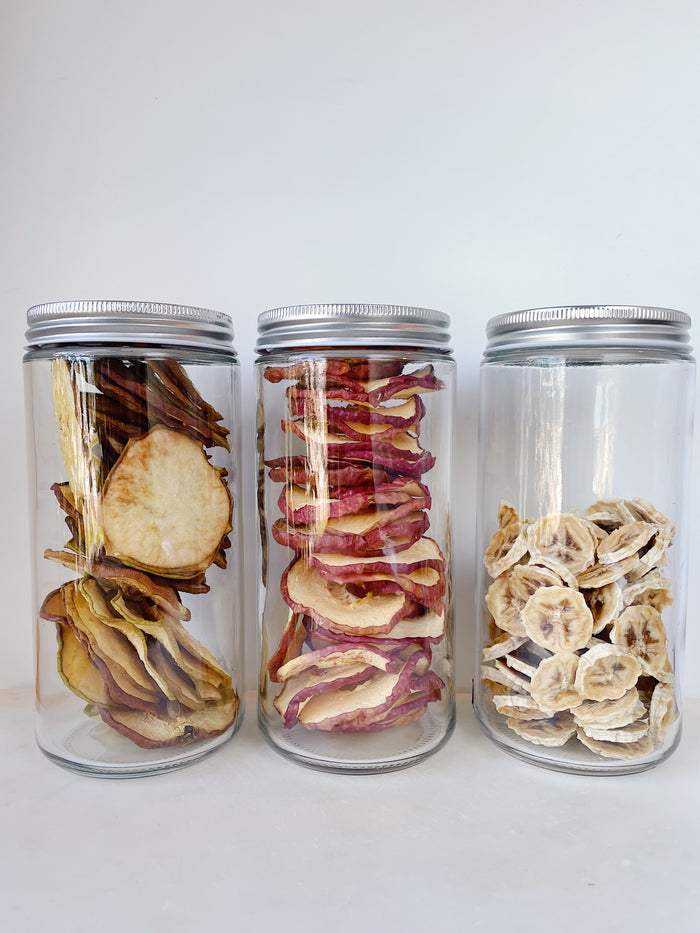
- Place fruit in an airtight container (jars are a good choice because you can see the fruit easily) and allow a little room so you can shake the contents of the container. You don’t want to have a huge amount of space, however, as this can produce even more moisture.
- Over the next 5 days, shake the contents of the container to check that the fruit doesn’t stick and can move freely. You also want to look out for any moisture beads on the container and be sure that the fruit doesn’t stick to the sides of the container or to each other without coming off with ease. If either of these occurs, remove them and put them back into the dehydrator for further drying.
- If you notice any mould at all, discard all of the dehydrated fruit. This means some of your dehydrated fruit wasn’t completely dry before conditioning.
To ensure you get the most out of all your hard work, it’s important to consider what type of containers are best for the storage of your dehydrated fruit. At BenchFoods, we recommend using jars, but you can also use airtight containers or even zip lock bags if you’re planning on storing smaller quantities or enjoying your dehydrated fruit within a shorter period.
It’s best to store your dehydrated fruits in a cool, dark place, away from light and heat that could potentially impact the quality of the fruit and affect its shelf life. Properly dehydrated, conditioned and stored dehydrated fruits can last anywhere from 6-18 months.



PREMIUM DOMESTIC, COMMERCIAL & INDUSTRIAL FOOD DEHYDRATORS
DESIGNED & ENGINEERED FOR THOSE WHO ARE SERIOUS ABOUT DEHYDRATING
Premium Domestic Dehydrators
-


 New Product LaunchUp to 35% off
Premium Domestic Dehydrators
1 Zone / 10 Tray / 0.6m² Tray Area - Stainless Steel
NOW€239 EURWas€369Save€130Unit price /Unavailable -
New Product LaunchUp to 35% off
Premium Domestic Dehydrators
1 Zone / 10 Tray / 0.6m² Tray Area - Black Stainless Steel
NOW€259 EURWas€399Save€140Unit price /Unavailable -


 New Product LaunchUp to 35% off
Premium Domestic Dehydrators
1 Zone / 10 Tray / 0.6m² Tray Area - Biltong Bundle - Stainless Steel
NOW€259 EURWas€399Save€140Unit price /Unavailable -
New Product LaunchUp to 35% off
Premium Domestic Dehydrators
1 Zone / 10 Tray / 0.6m² Tray Area - Biltong Bundle - Black Stainless Steel
NOW€279 EURWas€419Save€140Unit price /Unavailable -


 Most PopularUp to 40% off
Premium Commercial Dehydrators
1 Zone / 16 Tray / 2.56m² Tray Area
From€839 EURWas€1.395Save€556Unit price /Unavailable -

 New Product LaunchSALE 40% Off
Premium Commercial Dehydrators
1 Zone / 16 Tray / 2.56m² Tray Area - Biltong Bundle
NOW€909 EURWas€1.510Save€601Unit price /Unavailable -

 New Product Launch
 -

 New Product Launch
 -

 New Product Launch
 -

 New Product Launch


Premium Commercial Dehydrators
-
Most PopularUp to 40% off
Premium Commercial Dehydrators
1 Zone / 16 Tray / 2.56m² Tray Area
From€839 EURWas€1.395Save€556Unit price /Unavailable -
New Product LaunchSALE 40% Off
Premium Commercial Dehydrators
1 Zone / 16 Tray / 2.56m² Tray Area - Biltong Bundle
NOW€909 EURWas€1.510Save€601Unit price /Unavailable -


 Large CapacityUp to 37% off
Premium Commercial Dehydrators
2 Zone / 28 Tray / 11.90m² Tray Area
From€5.829 EURWas€9.295Save€3.466Unit price /Unavailable -


 Large CapacityUp to 38% off
Premium Commercial Dehydrators
2 Zone / 28 Tray / 11.90m² Tray Area - Biltong Bundle
From€5.979 EURWas€9.525Save€3.546Unit price /Unavailable -

 Up to 24% off
Premium Commercial Dehydrators
2 Zone - Horizontal / 32 Tray / 5.12m² Tray Area
From€2.889 EURWas€3.799Save€910Unit price /Unavailable -

 SALE 25% Off
Premium Commercial Dehydrators
2 Zone - Horizontal / 32 Tray / 5.12m² Tray Area - Biltong Bundle
NOW€3.029 EURWas€4.019Save€990Unit price /Unavailable -

 Up to 42% off
Premium Commercial Dehydrators
2 Zone - Vertical / 32 Tray / 5.12m² Tray Area
From€2.189 EURWas€3.799Save€1.610Unit price /Unavailable -

 SALE 42% Off
Premium Commercial Dehydrators
2 Zone - Vertical / 32 Tray / 5.12m² Tray Area - Biltong Bundle
NOW€2.329 EURWas€4.019Save€1.690Unit price /Unavailable


High-Capacity Industrial Dehydrators
-

 Up to 24% off
High-Capacity Industrial Dehydrators
1 Trolley / 30 - 60 Tray / 8.8 - 17.7m² Total tray area
From€26.595 EURWas€34.995Save€8.400Unit price /Unavailable -

 Up to 28% off
High-Capacity Industrial Dehydrators
2 Trolley / 60 - 120 Tray / 17.7 - 35.3m² Total tray area
From€37.595 EURWas€51.995Save€14.400Unit price /Unavailable -

 Up to 34% off
High-Capacity Industrial Dehydrators
4 Trolley / 120 - 240 Tray / 35.3 - 70.7m² Total tray area
From€56.895 EURWas€85.995Save€29.100Unit price /Unavailable -

 Up to 36% off
High-Capacity Industrial Dehydrators
8 Trolley / 240 - 480 Tray / 70.7 - 141.3m² Total tray area
From€91.995 EURWas€142.995Save€51.000Unit price /Unavailable -

 Up to 32% off
High-Capacity Industrial Dehydrators
10 Trolley / 300 - 600 Tray / 88.3 - 176.6m² Total tray area
From€119.995 EURWas€175.995Save€56.000Unit price /Unavailable -

-

-


