


Emergency Disaster Relief Organisations
Transforming Emergency Response with Advanced Food Preservation.
In emergency disaster relief, reliable food preservation supports the people and organisations working before, during and after a crisis. Community groups, government organisations, shelters, food-aid teams and coordinated response networks need food supplies that are stable, nutritious, easier to store and ready to move when normal access is interrupted. Commercial dehydrators help extend shelf life, preserve useful ingredients and reduce storage pressure, making them a practical tool for real-world emergency response and disaster relief operations.

Understanding Commercial Dehydrators.
Commercial dehydrators are valuable in emergency disaster relief because they help organisations preserve food in a controlled, repeatable way. By removing moisture from suitable ingredients, dehydration helps reduce spoilage risk, extend shelf life and make food lighter and more compact for storage and transport.
This matters when reliable food sources are under pressure. Fruit, vegetables, herbs, meats and meal components can be prepared in organised batches, packed clearly and built into a wider food-support plan. For relief teams, the advantage is not only having food available, but having food that is easier to manage, move and distribute when timing matters.
Key advantages for emergency food support include:
Extended Shelf Life:
Dehydrated foods can be stored for longer periods, reducing the need for frequent stock replenishment.
Nutrient Retention:
The dehydration process helps retain useful vitamins and minerals in suitable foods.
Space and Weight Efficiency:
Smaller, lighter food stores are easier to manage when storage and transport resources are limited.
Commercial Range
View All-


 Most PopularUp to 40% off
Premium Commercial Dehydrators
1 Zone / 16 Tray / 2.56m² Tray Area
From€839 EURWas€1.395Save€556Unit price /Unavailable -
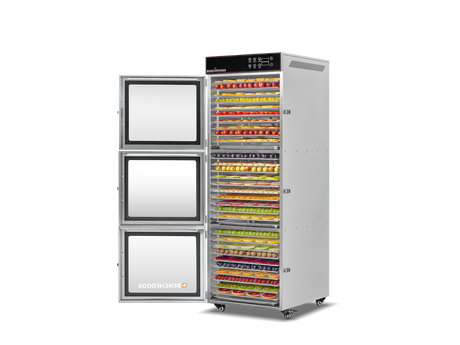
 Up to 39% off
Premium Commercial Dehydrators
3 Zone / 30 Tray / 4.8m² Tray Area
From€2.099 EURWas€3.449Save€1.350Unit price /Unavailable -

 Up to 42% off
Premium Commercial Dehydrators
2 Zone - Vertical / 32 Tray / 5.12m² Tray Area
From€2.189 EURWas€3.799Save€1.610Unit price /Unavailable -

 Up to 24% off
Premium Commercial Dehydrators
2 Zone - Horizontal / 32 Tray / 5.12m² Tray Area
From€2.889 EURWas€3.799Save€910Unit price /Unavailable -


 Up to 37% off
Premium Commercial Dehydrators
3 Zone / 60 Tray / 9.6m² Tray Area
From€4.595 EURWas€7.289Save€2.694Unit price /Unavailable -


 Large CapacityUp to 37% off
Premium Commercial Dehydrators
2 Zone / 28 Tray / 11.90m² Tray Area
From€5.829 EURWas€9.295Save€3.466Unit price /Unavailable -

 New Product LaunchSALE 40% Off
Premium Commercial Dehydrators
1 Zone / 16 Tray / 2.56m² Tray Area - Biltong Bundle
NOW€909 EURWas€1.510Save€601Unit price /Unavailable -

 SALE 39% Off
Premium Commercial Dehydrators
3 Zone / 30 Tray / 4.8m² Tray Area - Biltong Bundle
NOW€2.219 EURWas€3.624Save€1.405Unit price /Unavailable


People Are Talking About Benchfoods
Tolstoy goes here...
Selecting the Right Commercial Dehydrator.
Choosing a suitable commercial dehydrator for emergency disaster relief involves several practical factors:
- Capacity and Scalability: Match output to the scale of the response, expected food volumes and available storage.
- Energy Efficiency: Support repeated operation while keeping running costs and resource use manageable.
- Durability and Reliability: Choose equipment that can support consistent operation across changing response conditions.
The Impact of Dehydrators in Emergency Disaster Relief.
For emergency responders, community groups, government organisations and disaster relief teams, commercial dehydrators can support the creation of stable, long-term food supplies that are ready for deployment. With the ability to dehydrate a wide range of foods, from fruit and vegetables to herbs, meats and meal components, these machines can help maintain variety and nutrition in challenging conditions.
Enhancing Food Storage and Quality:
Commercial dehydrators can improve food storage capabilities, not just in quantity, but also in quality and reliability. This is important when access to fresh food is limited, delayed or disrupted.
Nutritional Preservation in Dehydrated Foods:
Maintaining good nutrition is a challenge in emergency scenarios. Dehydrated foods can help preserve useful nutritional value while making supplies easier to store, transport and prepare.
Relating Partners in Emergency Disaster Relief Organisations
From environmental solutions to pet treats, we are continually amazed with the diverse applications of our dehydrators.


Advanced Features and Innovations.
Commercial dehydrators have become more practical, efficient and accessible for organised food preservation. For emergency disaster relief teams, the value is not fancy technology for its own sake. It is dependable operation, clearer controls, consistent drying and better use of food before it is lost to spoilage.
Good equipment helps teams set appropriate drying conditions, repeat successful batches and support a wider range of ingredients. That consistency is important when food supplies need to be prepared, packed, stored and distributed with confidence.
Other Key Points:
- Energy Efficiency: Efficient design helps manage operating costs during repeated use.
- Ease of Use: Clear controls make training simpler for staff and volunteers.
- Quality Results: Consistent temperature and airflow support more reliable dried food.
- Versatility: A wider range of suitable foods can be processed for different response needs.
Implementing Dehydrators in Emergency Management Systems.
Dehydrators can be a useful asset in emergency management when they are built into a clear food-support system. Their role in extending the shelf life of suitable ingredients can help during crises where normal food supply is disrupted.
Strategic Integration Steps:
Needs Assessment:
Evaluate where dehydrators fit into the emergency food supply plan, including the types and quantities of food to process.
Training and Protocols:
Ensure teams understand how to operate, clean, maintain and document dehydrator use.
Storage and Distribution:
Plan how dehydrated foods will be packed, labelled, stored and distributed.
Community Collaboration:
Work with local organisations and suppliers to source suitable ingredients before they go to waste.
Regular Testing:
Conduct routine checks to make sure equipment and stored food supplies are ready when needed.
Dehydrators can strengthen emergency readiness when they are supported by training, storage systems and clear operational routines.
Operational Efficiency in Emergency Management.
Boosting Efficiency in Emergency Food Management:
Commercial dehydrators have become an indispensable tool in managing food logistics during emergency scenarios. Their ability to efficiently preserve large quantities of food not only enhances operational efficiency but also significantly reduces waste. Here’s a closer look at how these machines contribute to more effective resource management in crisis situations:
Enhancing Operational Efficiency:
- Extended Shelf Life: By removing moisture from perishables, dehydrators extend the shelf life of foods, which is crucial in emergencies where fresh food supply might be limited or interrupted.
- Space Optimisation: Dehydrated foods take up less space, making storage and transportation more manageable. This is particularly important in emergency situations where space and resources are often constrained.
- Rapid Response: The ability to quickly dehydrate and package food means that aid organisations can respond more swiftly to emergency needs, ensuring timely distribution of food supplies.
Minimising Waste:
- Preserving Surplus Produce: During emergencies, there's often a risk of food spoilage. Dehydrators help in preserving surplus produce that might otherwise go to waste.
- Durability of Supplies: Dehydrated foods are less susceptible to spoilage and contamination, reducing the amount of food that gets discarded due to spoilage.
Effective Resource Management:
- Cost-Effective Solutions: By reducing food waste and optimising storage and transportation, dehydrators offer a practical support for emergency food management.
- Adaptability: The versatility of commercial dehydrators allows for a wide range of foods to be processed, making it easier to adapt to the varying needs and preferences of affected populations.
In emergency scenarios, the strategic use of commercial dehydrators can significantly streamline the logistics of food storage and distribution. By enhancing operational efficiency, minimizing waste, and managing resources effectively, these machines play a vital role in ensuring that food aid is delivered promptly and sustainably.

Nutritional Considerations in Emergency Food Planning.
Catering to Diverse Nutritional Needs in Emergencies:
In emergency scenarios, dehydrated foods are essential for providing a balanced and nutritious diet. These foods are ideal for their long shelf life and the ability to meet various dietary requirements. They offer a range of essential nutrients from a diverse array of products like fruits, vegetables, and meats. This versatility is crucial in catering to different dietary needs and preferences during emergencies.
Variety and taste are also significant factors in emergency food supplies. Dehydrated foods maintain their natural flavours, which can be enhanced with proper seasoning and preparation methods. It's important to ensure that meals remain both nutritious and palatable, especially in prolonged emergency conditions where food diversity can affect morale and overall well-being.
Additional Points for Consideration:
- Special Dietary Needs: Incorporating options for specific health-related diets such as low-sodium, diabetic-friendly, or high-protein.
- Cultural Food Preferences: Acknowledging cultural food preferences can make emergency food support more acceptable, familiar and comforting.
- Ease of Preparation: Selecting dehydrated foods that are easy to prepare under limited conditions, ensuring accessibility for all.
- Education on Rehydration: Providing simple instructions on how to properly rehydrate and prepare dehydrated foods to retain their nutritional value.
Long-Term Storage and Rotation Strategies.
Maximising Freshness and Nutritional Value in Storage:
Proper storage and rotation of dehydrated foods are key to maintaining their freshness and nutritional value over time. This is especially important in emergency preparedness where the quality of stored food can have a significant impact. Here are some effective strategies and best practices for handling dehydrated food reserves:
Effective Storage Strategies:
- Airtight Packaging: Store dehydrated foods in airtight containers or vacuum-sealed bags to prevent moisture and air from degrading the food. This also helps in keeping out pests and contaminants. Additionally, you can also add in oxygen absorbers into the bags to further reduce the amount of oxygen within the package increasing shelf life.
- Cool and Dry Storage Conditions: Keep the dehydrated foods in a cool, dry place. Exposure to heat, humidity, or direct sunlight can lead to spoilage or loss of nutritional value.
- Organised Storage System: Use a labelling system with dates to track when the food was dehydrated or packaged. This assists in using the oldest products first and keeps the stock rotated.
Regular Rotation and Updating of Food Reserves:
- Scheduled Checks: Implement a regular schedule for checking the condition of the stored food. Look for signs of moisture, spoilage, or pest infestation.
- First-In, First-Out Principle: Rotate stock based on the ‘first-in, first-out’ principle, using the oldest stock first to ensure freshness.
- Periodic Replacement: Periodically replace the stored food to maintain a fresh and nutritionally valuable supply. This is also an opportunity to update the food variety and adjust to any new dietary needs or preferences.
Adhering to these storage and rotation strategies can significantly enhance the shelf life and quality of dehydrated foods. This ensures that when the need arises, especially in emergency situations, the food supply is not just available but also in optimal condition for consumption.

Commercial dehydrators are more than food preservation tools. For emergency disaster relief organisations, they can support stronger food planning, clearer stock rotation and more dependable response systems. Understanding how to use them well can help community groups, government organisations, shelters and relief teams manage food resources more effectively during real emergencies.
Contact us to learn more about BenchFoods commercial dehydrators and how they can support emergency food preservation, disaster relief planning and coordinated response operations.
FAQs
What should organisations consider when choosing a dehydrator for disaster relief?
Capacity and scalability to match expected food volumes, energy efficiency for repeated operation, and durability that holds up across changing response conditions.
How should dehydrated food be stored for emergency reserves?
In airtight containers or vacuum-sealed bags, in a cool, dry place away from heat and direct sunlight, with oxygen absorbers added for extended shelf life.
How do you know which stock to use first?
Label everything with the date it was dehydrated or packaged, and follow first-in, first-out, using the oldest stock before newer batches.
How often should stored emergency food supplies be checked?
On a regular schedule, checking for moisture, spoilage, or pest infestation, with periodic replacement to keep the reserve fresh and nutritionally sound.
What foods can actually be processed for emergency food planning?
A wide range, fruit, vegetables, herbs, meats, and meal components, which helps maintain variety and nutrition in supplies rather than relying on a narrow set of options.
What does successfully integrating dehydrators into an emergency response plan actually involve?
A needs assessment for volume and food types, training staff and volunteers on operation and documentation, a clear storage and distribution plan, and regular equipment and stock testing to confirm readiness.


