FREE SHIPPING ON ORDERS OVER €100*  •  TRACK MY ORDER

Schedule A Call

Dehydrating 101 · Fruits

Dehydrated Fruits: How to Dehydrate Fruit at Home

Dehydrating fruit removes the water and keeps the flavour and nutrients, turning surplus or bulk-bought produce into garnishes, snacks and baking ingredients that last for months — at a fraction of the price of store-bought dried fruit.

Assorted dehydrated fruit slices including citrus, kiwi and berries

55 °C

Typical drying temperature

45 °C for lemons and limes

½ cm

Ideal slice thickness

Citrus slightly thicker, 6–7 mm, rind on

6–24 h

Typical drying time

Whole berries can need 24–48 hours

6–12 mo

Typical shelf life

Properly dried, conditioned and stored cool

Why dehydrate fruit?

Dried fruit is hugely popular, but store-bought bags cost a small fortune for a small quantity. Making your own gets the most out of fresh produce — and there’s almost no fruit that’s off-limits.

Save money

A 30 g pouch of dried orange slices costs around €9. A kilo of fresh oranges costs €3.50 — and makes far more.

Rescue surplus fruit

No more filling the organic bin. Ripe fruit you can’t eat in time becomes your own stash of garnishes and healthy snacks. Only dry sound fruit: discard anything bruised, mouldy or fermenting.

Buy in bulk, in season

Stock up at the farmer’s market when fruit is cheap and at its peak, then enjoy it all year round.

Concentrated nutrients

Drying removes the water, so fibre, minerals and natural sugars are more concentrated per gram than in fresh fruit.

No added sugar or preservatives

A healthy, all-natural snack for the whole family, without the stacks of sugar in many store-bought varieties.

Endless uses

Cocktail garnishes, breakfast toppings, baking, trail mix, fruit leather, powders and even Christmas décor.

Read the full introduction →

Dehydrated fruits are hugely popular these days but buying a store-bought bag of dehydrated orange slices for your at-home cocktail garnish or a scoop of dried mango for a quick on-the-go snack can cost a small fortune for a seemingly small quantity! As with most dehydration, making your own dehydrated fruits is a great way to get the most out of your fresh produce and save money.

  • No more filling up your organic bin with surplus fruit, as ripe, sound fruit can now be preserved as your own dehydrated stash of garnishes and healthy snacks.
  • Buy fresh fruit in bulk for a much cheaper price from your local farmer’s market or produce store and use it to create your own dehydrated fruits.

Whilst dehydrated fruits are no substitute for wholesome whole foods in your daily diet, they’re still packed with a heap of nutrients and stacks of flavour, making them a great addition to drinks, breakfast bowls, or as a healthy, all-natural snack for the whole family.

When it comes to making your own dehydrated fruits, there’s almost no fruit that’s off-limits! So, what are the different types of dehydrated fruits and their benefits? Read on to find out.

Drying temperature and case hardening

Fruit needs low, steady heat. Hotter feels faster, but it seals the outside before the centre has dried — and fruit that’s still moist inside will go mouldy in the jar.

Critical — avoid case hardening

Keep most fruit at around 55 °C. Going higher risks drying the outside before the inside.

Case hardening happens when the surface dries and seals before moisture can escape from the centre, leaving the fruit hard outside and underdried inside. Underdried centres are also where mould starts. The fix is to lower the temperature and allow more time. [1]

Getting the temperature right

  • Most fruit: around 55 °C.
  • Lemons and limes: no higher than 45 °C. They darken very easily above that, so allow 18–24+ hours.
  • Thin slices dry faster and more evenly than halves, quarters or whole fruit.
  • Firmer fruit dries quicker but tastes less sweet than riper fruit.
  • Want crisp chips instead of chewy? Leave the fruit in longer, at the same temperature.
Tip

Frozen fruit dehydrates well and doesn’t need pre-treating. Rinse it briefly under cold water to separate the pieces, slice if needed, then dry as normal. Frozen berries need extra care, though: see the food-safety section below.

Where the guidance comes from

Published guidance varies. US extension services give 60 °C (140 °F) as the best temperature for drying fruit, and warn that higher temperatures cook the fruit instead of drying it. [1] Germany’s BZfE suggests 40–50 °C for an oven with the door slightly open. [3] We recommend about 55 °C for most fruit in a BenchFoods dehydrator, with lemons and limes lower to protect their colour. Drying temperature is a quality and drying-speed setting; it does not sterilise the fruit.

The best fruits to dehydrate

Below are our favourite fruits across four groups — citrus, berries, stone fruit and everything else — with the prep, drying time and best uses for each.

Citrus

The easiest fruit to dehydrate, available year-round across Europe. Slice just over ½ cm (6–7 mm) with the rind on. Most citrus darkens in the dryer — pre-treatment and a lower temperature help.

Read the full citrus introduction →

Citrus fruits are one of the easiest to dehydrate, and their uses are endless! They make a fantastic fruit garnish for various cocktails and drinks — whether you’re running the local bar or restaurant or for your at-home cocktail hour or gathering — they can be used as decoration in potpourri or displayed in jars, and they provide additional flavour to water, tea or even meat and fish dishes. Whilst there may be peak times for certain citrus to be in season in Europe, most varieties are available all year round, and with citrus growers across the region, there should be no issue getting your hands on exceptional tasting fruit, whether it be in winter or summer.

If you’re a business owner or simply a fan of the citrus garnish for your homemade drinks, there’s no denying the cost-effectiveness of making your own dehydrated citrus slices over store-bought. Buying pre-made dehydrated orange, lemon or lime slices can send your costs through the roof, with the number of slices per bag or jar being minimal in comparison to buying fresh. (See the cost comparison below.)

Whilst all citrus fruits are perfect for dehydrating, it’s important to note that during the dehydration process, most will lose their vibrancy of colour and change significantly with the high temperatures. We will look at this in further detail later, as there are ways to pre-treat the fruit to help maintain its colour and quality. To ensure the most effective, efficient and even results with dehydrating citrus fruits, we suggest slicing them just over ½ a cm in width (around 6-7 mm), keeping the rind on. But without further ado, here’s our list of top dehydrated citrus to get you started!

Dehydrated orange slices

Oranges & blood oranges

High in vitamin C with a sweet, zesty flavour that intensifies as it dries — the sweeter the orange, the sweeter the slice.

Prep
Rind on, 6–7 mm rounds
Time
16–18 hours
Temp
~55 °C
Best for
Garnish, Christmas décor, baking
Full orange guide →

With a high vitamin C content and a rich source of nutrients and antioxidants, dehydrated oranges deliver a variety of health benefits as well as a sweet, zesty flavour. Being that dehydrated fruits keep for months, long after fresh produce would have spoiled, dehydrated oranges are a great snack to pack whilst out camping or hiking or even to enjoy daily. Not only do they provide anti-inflammatory benefits, but they also support the immune system and help to rebuild bone and tissue.

Any type of orange is perfect to use for dehydration, but keep in mind that during the dehydration process, the flavour is intensified, so the sweeter the orange, the sweeter the flavour! A great garnish for cocktails, drinks, platters and charcuterie boards, dehydrated oranges can be great decorations for Christmas added to wreaths, Christmas trees or table decorations or as a finishing touch to baked cakes or cupcakes.

Some other uses for dehydrated oranges include:

  • Use in hot tea, water, champagne or spirits for added flavour.
  • Dip half in chocolate and sprinkle with sea salt for a sweet treat.
  • Add to oats, smoothie bowls and breakfast cereal.
  • Place slices on chicken or fish when roasting or baking.
  • Make your own at-home potpourri or citrus bath infusion.
Dehydrated lime slices

Limes

Sweetly sour and the classic margarita garnish. Natural sugars brown easily, so dry at 45 °C to keep the colour.

Prep
Rind on, 6–7 mm rounds
Time
18–24+ hours
Temp
45 °C max
Best for
Cocktails, fish, potpourri
Full lime guide →

Much like oranges, dehydrated limes are filled with vitamins and minerals that deliver multiple health benefits to the body. A great source of antioxidants and vitamin C, dehydrated limes strengthen immunity, improve digestive health, boost skin health and provide anti-inflammatory benefits. They also contain potassium, which helps to lower blood pressure and cholesterol and support overall heart health, and calcium, which helps to strengthen bones and muscle tissue — talk about wonder fruit!

Delivering a sweetly sour flavour, dehydrated limes are a great decoration for cakes, ice cream, muffins and cupcakes, and make the perfect garnish for cocktails — think margaritas! Do remember that limes change in colour significantly when dehydrated, often darkening as the natural sugars in the fruit brown from the temperature. We will look at the dehydration process in more detail later, but this is important to know if you’re using them for decorative purposes and were hoping for that lime green colour.

Other ways to use dehydrated limes include:

  • Added flavour for chicken or fish.
  • A garnish for various cocktails and drinks, including sparkling water.
  • Use for potpourri or decoration in clear jars or canisters.
  • Add to a hot bath for citrus-infused water.
  • Chop and add to soups and stews for incredible flavour.
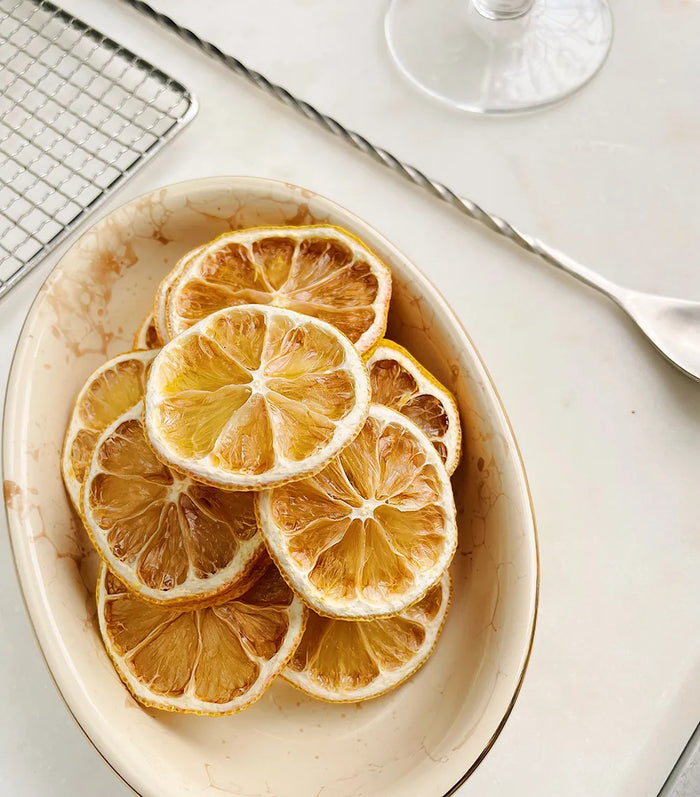
Dehydrated lemon slices

Lemons

A great source of vitamin C. Darkens from bright yellow to orange above 45 °C — keep it low.

Prep
Rind on, 6–7 mm rounds
Time
18–24+ hours
Temp
45 °C max
Best for
Tea, garnish gift jars, baking
Full lemon guide →

Dehydrated lemons are loaded with nutrients and antioxidants, and are a great source of vitamin C, helping to fight against damaging free radicals and protect the body against illness and disease. They contain fibre, are low in fat and can support everything from heart and digestive health to assisting with weight loss and boosting hydration.

Like other citrus fruits, dehydrated lemons make a great decorative feature in jars and canisters or on various Christmas decorations, including wreaths or even tied onto gift wrapping, but as with limes, be mindful that dehydrating will change the colour of sliced lemons from a bright yellow to a darker, orangey tone. Dehydrate a bunch of lemons, limes and oranges and combine them to create your own pouches or jars of dried drink garnishes as gifts for friends or the dedicated bartender in the family! Whilst it may not be your favourite thing to eat fresh lemon slices, dehydrated lemons provide that same intense citrus flavour, making them a great addition to soups, stews, teas and hot water.

The uses for dehydrated lemons are endless — here are a few more suggestions.

  • Decorate cakes, muffins, cupcakes and slices.
  • Use to flavour fish and chicken dishes.
  • Perfect for a cocktail, drink or ice cream garnish.
  • Add to tea, hot water or fresh/sparkling water for added flavour.
  • Make lemonade.
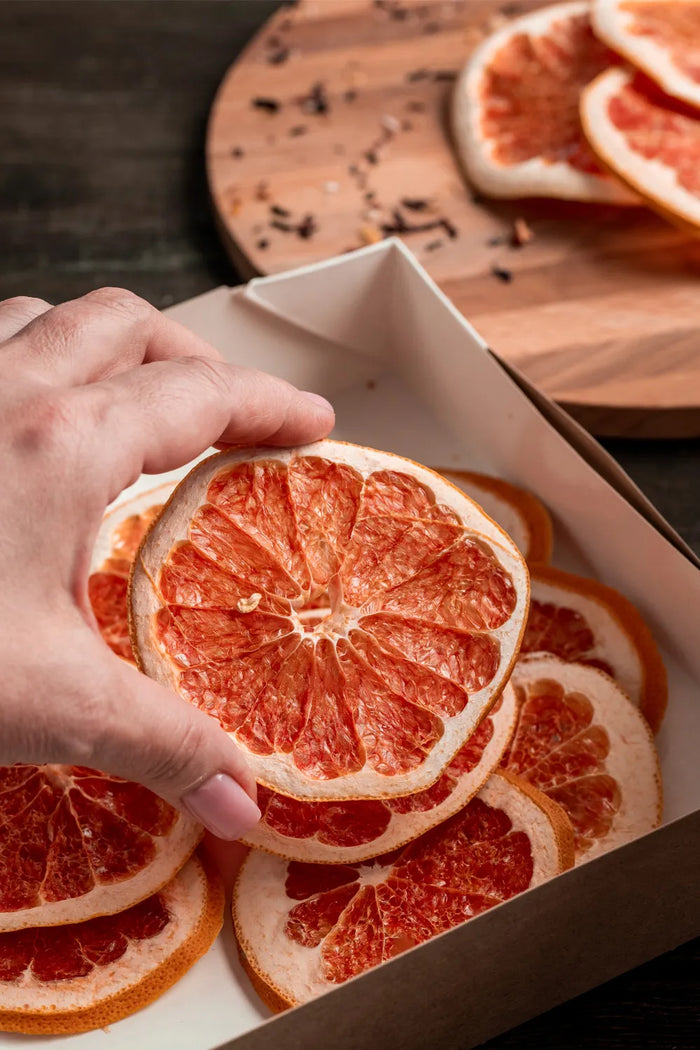
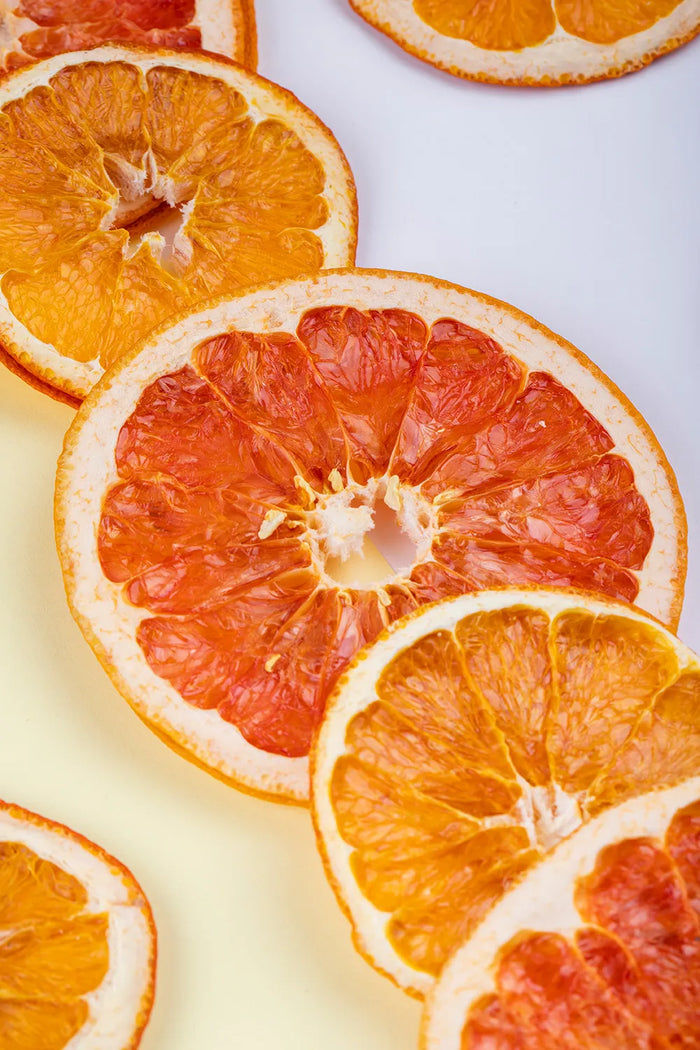
Dehydrated grapefruit slices

Grapefruit

The most forgiving citrus — keeps most of its pinky-orange colour and a sweet, tangy flavour.

Prep
Rind on, 6–7 mm rounds
Time
16–18 hours
Temp
~55 °C
Best for
Paloma, green tea, salads
Full grapefruit guide →

Grapefruit is one of the most forgiving citrus fruits when it comes to the dehydration process. Unlike its citrus sisters, lemons and limes, grapefruit maintains most of that lovely pinky/orangey colouring when dehydrated and delivers a sweet, tangy flavour too. Filled with nutrients and antioxidants, dehydrated grapefruit contains vitamin C, potassium, folate and magnesium, providing a heap of health benefits to the mind and body. Some of the health benefits of dehydrated grapefruit include improving heart health, supporting weight loss and appetite control, and protecting the body against illness and disease. Grapefruit can interact with some medicines, including some statins. If you take regular medication, check the leaflet or ask your pharmacist before eating it. [11]

As with other citrus fruits, dehydrated grapefruit can be enjoyed and used in various ways. Whether it be as a garnish for a drink or dish, as a healthy snack or as a decorative touch at your home or business, dehydrated grapefruit adds a tropical touch to almost anything!

See below for our favourite suggestions.

  • Flavour your favourite cocktails or use as a garnish — think Paloma, Grapefruit Mojitos or Margaritas.
  • Add to hot teas such as green tea for added flavour.
  • Use in salads and various sauces.
  • Decorate desserts and sweet dishes.
  • Use to flavour fish or chicken dishes.
  • Make potpourri or use as decoration in clear jars and canisters with other citrus fruit.

Berries

Sweet, colourful and lightweight. Fresh berries go mouldy within days, but dried they keep up to a year. Almost all need their skin broken or cut before drying.

Read the full berries introduction →

The sweet, delicious flavour and rich colour of berries make them a great choice for dehydration and can be used in many ways. Not only do they make a great on-the-go snack because they’re super lightweight and perfect for travel, but they’re also a healthy alternative to processed snacks that are filled with artificial sugars, flavours and preservatives so you can munch away guilt-free! Dehydrated berries make a great fruit powder (see our dehydrated powders page for further info), which can be mixed through yoghurts, cakes, muffins and pancakes to add a hint of sweetness and colour.

Whole dehydrated berries can be mixed with nuts and other dehydrated fruits to create your own nut/trail mix, added to your smoothie for extra nutrients and flavour, and are also a great topping for oats, porridge and various breakfast dishes — perfect if you’re running your own cafe or brunch spot or just wanna amp up your at-home breakfasts! Or, why not blend fresh berries or combine them with other fruits like peaches, apples or mangoes to create your very own dehydrated fruit leather — the perfect lunchbox or after-school snack!

As with citrus fruits, buying pre-made dehydrated berries for your business or home use can result in expensive costs for little quantities. (See the cost comparison below.)

Dehydrating berries is a great way to get the most out of your fruit too, as it will usually only take a few days for fresh berries to turn mouldy. Whilst some berry varieties have a different pre-treatment process to ensure quality dehydration, once berries have been dehydrated, you can store them for anywhere up to a year and use them as your heart desires. It’s also important to note that the nutrient content in dehydrated berries is way more concentrated as the water content has been removed, which makes them an even more concentrated source of minerals, fibre and natural sugars compared to their fresh varieties.

Check out some of our favourite dehydrated berries below, including their benefits and uses. (Note: strictly speaking, blackberries and raspberries are clusters of tiny drupelets, which makes them close relatives of stone fruit — we’ve kept them with the other berries.)

Dehydrated blueberries

Blueberries

A superfood that keeps its antioxidants when dried. Small enough to dry whole — once the skin is broken.

Prep
Pierce, blanch, halve or quarter
Drying time
14–16 hours
Temperature
~55 °C
Best for
Oats, trail mix, baking, fruit wraps
Read the full blueberry guide →

Dehydrated blueberries deliver a tonne of health benefits and are super tasty too, making them a perfect choice to snack on when travelling or to keep you going throughout a busy day. Most of us know that fresh blueberries are filled with stacks of nutrients that support optimal health and well-being, and the great thing is that the dehydrated version contains much of the same! During the dehydration process, the water content is removed, but the minerals, fibre and many of the antioxidants remain. Being that blueberries are so small in size, you can dehydrate them whole, but the skin will need to be broken to ensure effective dehydration. This can be done either by blanching or cutting, or poking with a knife or skewer.

Dehydrated blueberries contain exceptionally high levels of antioxidants, which help to fight off damaging free radicals that cause illness and disease, and they also contain fibre, which helps to support a healthy digestive system, as well as potassium and vitamin C. Dehydrated blueberries also help maintain healthy cholesterol levels, support blood and heart health, reduce signs of ageing and promote positive brain function and mental health there’s a reason why they’re considered a superfood!

Naturally low in fat, dehydrated blueberries can be used in various ways — see our suggestions below.

  • A delicious addition to morning oats, granola, yoghurt and smoothies.
  • Can be mixed with various nuts and other dehydrated fruits to create your own trail mix.
  • Use in baked goods such as cakes, muffins or even pancakes.
  • Mix through salads for a hit of sweetness.
  • Make delicious fruit wraps (more on this later).

To speed up the dehydration process, the skin of blueberries should be broken prior to dehydration. You can do this by either piercing the skin of each blueberry with a sharp knife, blanching so the skin splits, or cutting them in half or even quarters — this will not only enable them to dry quicker but will result in a crispier finished product.

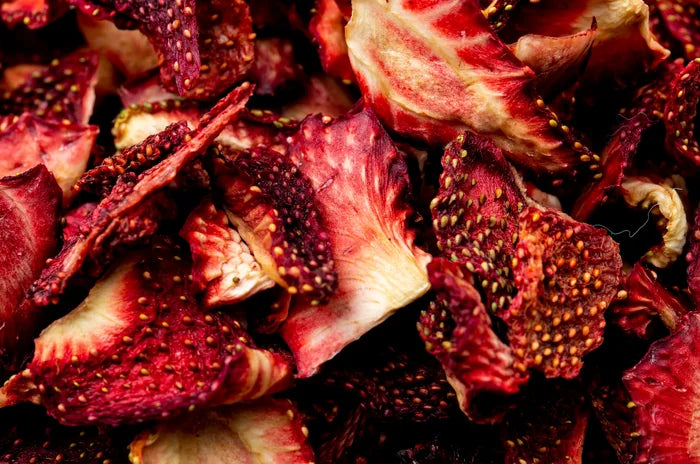
Dehydrated strawberry slices

Strawberries

Short-season fruit that dries fastest of all the berries and stores for up to 6 months once fully dry.

Prep
Stems off, slice across to ½ cm
Drying time
6–10 hours
Temperature
~55 °C
Best for
Champagne, desserts, smoothies
Read the full strawberry guide →

Like most other berries, fresh strawberries have a particularly short shelf life and are, unfortunately, not a fruit that you can enjoy all year round as their quality and flavour varies greatly when they’re out of season. Dehydrating strawberries is a great option if you can’t get enough of this sweet fruit, as it preserves both the nutrients and taste and you can store and use for up to 6 months, providing all the moisture has been removed during the dehydration process. To prep for dehydration, remove the green stems and slice across the strawberries to ½ cm thickness. This will allow them to dry quicker and more evenly.

Dehydrated strawberries provide significant health benefits and are a rich source of antioxidants and vitamin C, and also contain potassium and fibre. They’re naturally low in fat and free of cholesterol, and keep much of their fibre and mineral content once dehydrated. Dehydrated strawberries help to lower cholesterol, boost immunity, act as an anti-inflammatory, promote heart health and support healthy bowel function, plus, they help to keep you feeling fuller for longer preventing unhealthy snacking between meals. Being that dehydrated strawberries are also a good source of natural carbohydrates, they’re great to consume pre or post-exercise as they provide you with the energy needed to get through your workout or refuel after an intense session.

See below for our suggestions on how to incorporate dehydrated strawberries into your diet.

  • Add to morning oats, yoghurt, granola or cereal for some sweet flavour.
  • Mix with nuts for a homemade trail mix.
  • Blend into your morning smoothie.
  • Use as a garnish on various cakes and desserts, either whole, sliced or crushed.
  • Add to glasses of champagne or as a garnish in various cocktails.
  • Mix through salads for added sweetness.
  • Dip in chocolate for a sweet treat.
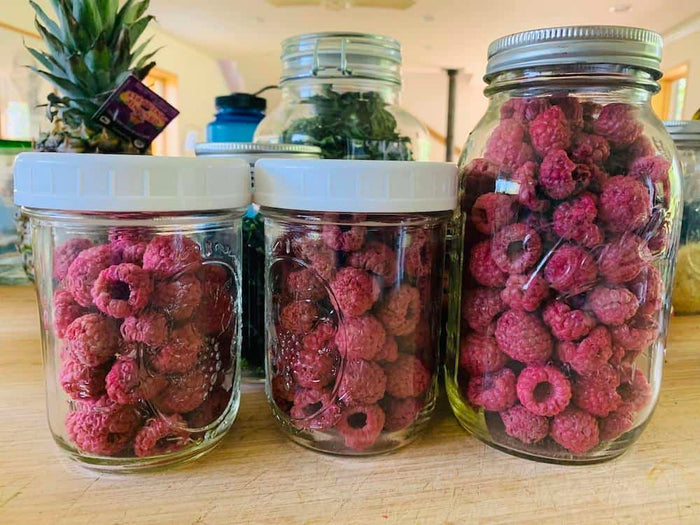
Dehydrated raspberries stored in jars

Raspberries

Keeps its zesty sweetness and colour. Rich in antioxidants that support brain function — great for kids.

Prep
Cut in half
Drying time
10–12 hours
Temperature
~55 °C
Best for
Baking, pancakes, cereal
Read the full raspberry guide →

That zesty, sweet flavour from fresh raspberries is just as present in the dehydrated version, making dehydrated raspberries a delicious snack on their own or great addition for both flavour and colour to various dishes. We recommend cutting raspberries in half prior to dehydrating, as this will speed up the dehydration process more than if they were dried whole.

Rich in vitamin C, fibre and manganese, dehydrated raspberries are also rich in antioxidants, contain minerals such as magnesium, potassium and copper, and provide multiple health benefits to both the mind and body. The high levels of antioxidants in raspberries make them a powerful superfood that fights against disease and illness, as well as boosts brain function and memory. This makes dehydrated raspberries a great snack not just for adults but for the little ones in your life too, as they can provide nutrients that support learning and brain development. Other benefits of dehydrated raspberries include improving vision, reducing signs of ageing, controlling blood sugar levels and promoting healthy digestion.

Whilst we love munching on dehydrated raspberries as is, there are many wonderful ways you can enjoy them. See below for our suggestions.

  • Use for baking cakes, muffins, cupcakes, cookies and granola bars.
  • Add as a topping on morning cereals, oats, porridge and granola.
  • Mix through pancake batter or use as a topping.
  • Combine with other dried fruits or nuts.
  • Blend into your smoothie.
  • Stir through salads for a burst of flavour.
  • Add to water or other drinks/cocktails for flavour or garnish.
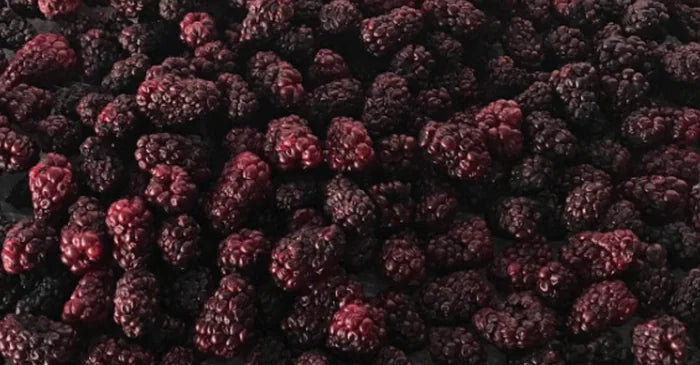
Dehydrated blackberries

Blackberries

A good source of vitamins C and K, with fibre and antioxidants. The seeds stay tart, so they shine most in baking and toppings.

Prep
Cut to speed drying
Drying time
14–16 hours
Temperature
~55 °C
Best for
Waffles, yoghurt, garnishes
Read the full blackberry guide →

Dehydrated blackberries are much like dehydrated raspberries in that they deliver a burst of flavour just like their fresh version and can be cut to make the dehydration process quicker. A good source of vitamins C and K and rich in antioxidants, dehydrated blackberries are also naturally low in fat. They’re also high in fibre which promotes a feeling of fullness, therefore preventing unnecessary snacking on unhealthy processed foods, which can contribute to weight gain.

Other benefits of dehydrated blackberries include reducing cholesterol, assisting with digestion, supporting overall blood health, protecting the immune system, improving brain health and function, and producing collagen in the skin.

One thing to keep in mind when dehydrating both raspberries and blackberries is that they’re both filled with a heap of little seeds, which are very much still present in the dehydrated result. After enjoying the sweet, fleshy part of the berries, you’re left with the seeds, which are definitely more of a tart/bitter flavour. You will notice this more, of course, if you’re snacking on dehydrated blackberries on their own, but if you’re mixing them in various baked goodies or as a topping on breakfast dishes, it won’t be so obvious.

Some of our favourite ways to use dehydrated blackberries include:

  • Add to salads for extra sweetness.
  • Use in various breakfast dishes, including pancakes and waffles or as a topping on oats, cereal and granola.
  • Blend into smoothies.
  • Use in baking cakes, muffins and cupcakes.
  • Perfect as a drink or dessert garnish.
  • Stir through yoghurt or ice cream.
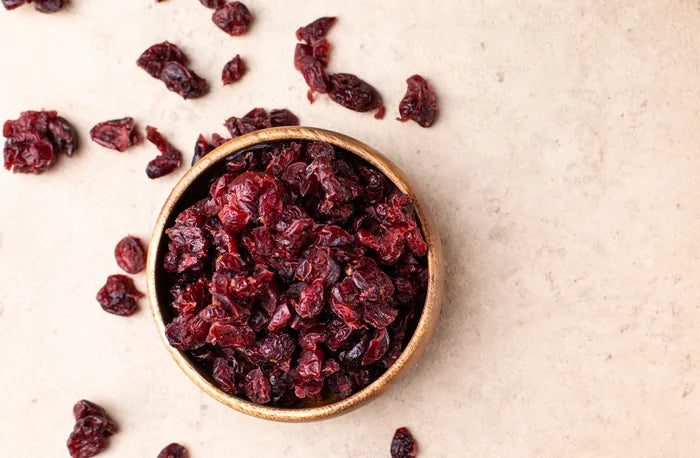
Dehydrated cranberries

Cranberries

Anti-inflammatory, good for oral and urinary health, and among the longest-keeping dried fruits when fully dry.

Prep
Cut or break the skin
Drying time
14–16 hours
Shelf life
About 12 months
Best for
Granola, scones, bread
Read the full cranberry guide →

As with all other berries, cranberries need to be cut or have their skin broken prior to dehydrating to make their drying time more efficient and effective. Ensuring that berries are fully dried post-dehydrating will extend their shelf life to about 12 months if stored in a cool, dark pantry. In warmer and more humid climates, store them in the refrigerator or freezer instead (more on correct storage for dehydrated fruits later).

Dehydrated cranberries offer numerous health benefits, not just for adults but for children and young adults too. Rich in nutrients, vitamins and antioxidants, dehydrated cranberries have anti-inflammatory properties that support heart health and reduce the risk of chronic disease. Dehydrated cranberries also contain certain antioxidants that prevent bad bacteria from causing infections like UTIs, as well as improve oral hygiene by preventing harmful bacteria from sticking to gums and teeth. Other benefits include boosting collagen and hydration in the skin, supporting weight loss and assisting with digestion.

Discover some of our favourite ways to use dehydrated cranberries below.

  • Mix with nuts and other dehydrated fruits to make a nutritious trail mix.
  • Use in desserts such as various cakes, muffins and cookies.
  • Use to make a variety of bread, muffins and scones.
  • Make homemade granola by mixing dehydrated cranberries with oats, nuts and seeds.
  • Add as a topping on morning oats, porridge or cereal.
  • Sprinkle into salads.

More berries to try

Feeling inspired? Try some of our other nutritious berry suggestions and create delicious dehydrated berries to store and use all year round.

Also worth trying: Goji berries, Inca berries, Boysenberries, Blackcurrants, Acai berries.

Stone fruit

Juicy and full of flavour, but only in season June to September. Halve or quarter to remove the pit, then slice where possible. Skin-on pieces go skin side down; a salted-water rinse helps keep the colour.

Read the full stone fruit introduction →

Stone fruits such as peaches, nectarines and mangoes are super juicy, full of flavour and a great option when it comes to creating dehydrated fruits. Whilst stone fruits are only in season during the warmer months in Europe — think June through September — you can buy them in bulk and enjoy their rich flavour and nutritional benefits all year if they’re dehydrated and stored correctly.

Dehydrating stone fruits is also an effective and smart way to get the most out of your fresh produce, as it won’t take long for them to turn and not be in their prime. When dehydrating stone fruits, the fruit should be cut in halves or quarters so the pit can be removed, but you can choose whether to remove or leave the skin on — if you’ve chosen to leave the skin on, place the fruit skin side down on the dehydrator tray.

Another tip to ensure effective dehydration is to push on the curved or outside of the fruit inward — pushing the flesh of the fruit forward, which will allow the fruit to dry quicker. Alternatively, cut the fruit into thin slices, and this will guarantee that the fruit will dehydrate evenly and even faster — we prefer slicing where possible on larger fruits, but smaller stone fruits like apricots, plums and cherries can be kept in halves or quarters if desired.

To maintain the colour, it’s important to pre-treat stone fruit, and this can be done by rinsing in salted water and draining and drying thoroughly before dehydrating (more on pre-treatment and conditioning later). (See the cost comparison below.)

Dehydrated stone fruits can be used in a variety of ways and deliver a sweet, luscious flavour that makes for a delicious snack or tasty addition to any dish, both sweet and savoury. Think breakfast dishes like oats, porridge and granola, desserts such as puddings, cakes and pies, or savoury dishes including salads, meat dishes or charcuterie boards — the ways to use dried stone fruit are endless! As mentioned above in our berries section, you can also blend various stone fruits, either on their own or combined with other fruits, to create a delicious dehydrated fruit leather for the whole family to enjoy. So, what are some of our go-to stone fruits for dehydrating? Check out our list below.

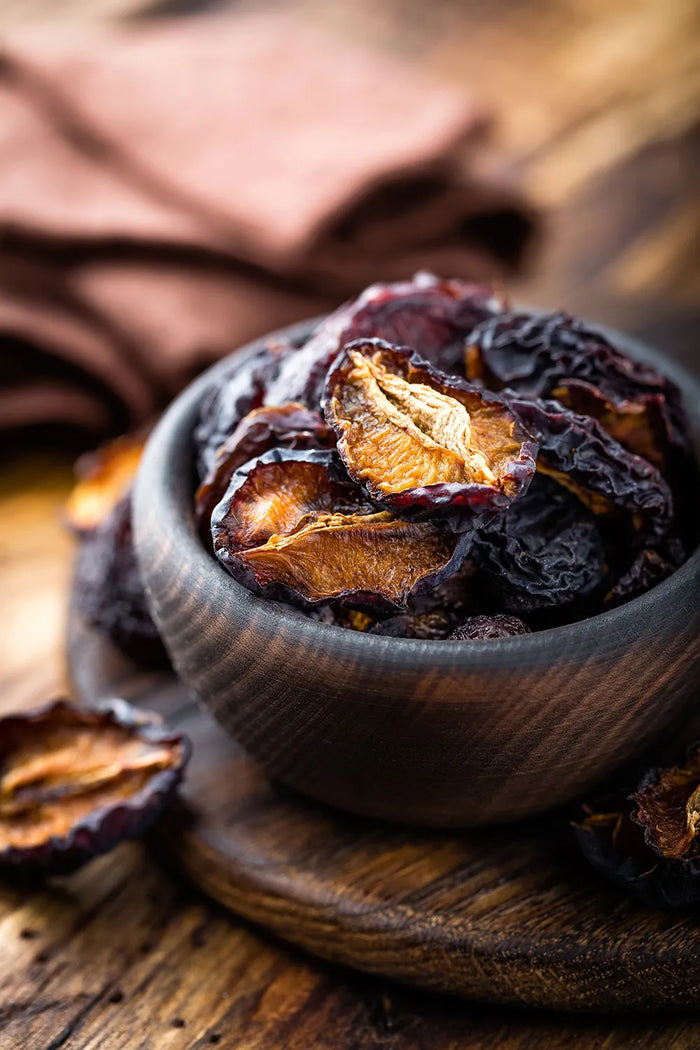
Dehydrated plums (prunes)

Plums (prunes)

All prunes are dried plums, but smaller, denser plums work best. Very sweet and nutrient-dense — enjoy in moderation.

Prep
Pit, slice or chunk; small ones whole if blanched
Drying time
12–16 hours
Temperature
~55 °C
Best for
Baking, meat dishes, party bites
Read the full plum guide →

Firstly, to clear up any confusion, prunes are in fact, dehydrated plums. It should be said, however, that whilst all prunes are plums, not all plums can be made into prunes, and it’s usually the smaller, denser and less juicy varieties of plums that get turned into prunes.

Dehydrated plums or prunes deliver a super sweet flavour (more than fresh plums) derived from their concentrated content of natural sugars, so it’s important to be mindful of serving sizes and how many prunes you snack on throughout the day (too many can also cause an upset tummy and regular toilet visits!). Whilst they may have more sugars and carbs, they also have a higher concentration of nutrients following the dehydration process. Dehydrated plums provide multiple benefits to our health and well-being and contain a rich source of antioxidants and nutrients, including fibre, magnesium and potassium, as well as vitamin K and some B vitamins. Dehydrated plums help to reduce inflammation, support digestion and healthy bowel movement, improve bone and heart health and reduce the risk of illness and disease.

With most plums, we recommend pitting and then either slicing or cutting them into chunks prior to dehydrating. If you have a smaller variety of plums, you can dehydrate them whole and leave the pit in, but you’ll need to blanch them first to break the skin to allow for more effective dehydration.

Dehydrated plums are a delicious snack on their own, but there are many ways to use them — see below.

  • Add chopped to cookies, cakes, muffins, scones or bread in replacement of raisins.
  • Dip in chocolate for a sweet treat.
  • Chop and mix with nuts and various other dehydrated fruits to create a trail mix.
  • Use in a variety of meat dishes (chicken, pork or beef).
  • Wrap in bacon for a delicious party favour.
Dehydrated peach slices

Peaches

A great energy snack for athletes and hikers. Firmer peaches dry faster; softer ones taste sweeter.

Prep
Quarter to pit, slice evenly; pre-treat
Drying time
8–12 hours
Temperature
~55 °C
Best for
Trail mix, cheese boards, pork
Read the full peach guide →

Juicy peaches are delicious when dehydrated, giving that burst of flavour to any dish or as a healthy snack. When choosing peaches to dehydrate, there are a couple of things to consider. The firmer the peach, the quicker it will take to dehydrate, however, because they’re not as ripe, you likely won’t get the same sweet flavour that you would from softer peaches. Choose peaches with good colouring, a strong sweet fragrance and that are slightly soft to the touch — avoid peaches with any bruising or brown spots. It’s completely up to you if you wish to remove the skin pre-dehydrating or keep the skin on, but the best way to do this is by blanching or gently using a peeler.

We recommend removing the pits by cutting the peach in quarters (they should pop out easily this way) and slicing the peaches evenly to ensure consistency when dehydrating. You can also choose to pre-treat the peaches prior to dehydrating to prevent a change of colour, as they can brown when exposed to heat (more on this later).

Dehydrated peaches provide a lot of nutritional benefits and are a great source of energy, making them a perfect snack for athletes or those who exercise frequently and when hiking or riding. Dehydrated peaches contain vitamins A and C, some B vitamins and vitamin K, and minerals including iron, copper and magnesium. They also contain potassium and are naturally low in sodium, which supports optimal blood and heart health. Other health benefits of dehydrated peaches include protecting the immune system, strengthening bones, boosting skin and eye health and supporting digestive health.

Whilst dehydrated peaches are super delicious on their own, there are many ways you can use them in cooking to boost flavour. See our favourites below.

  • Mix into a homemade trail mix.
  • Use as topping on morning oats, cereal, porridge or yoghurt.
  • Add to a cheese plate or charcuterie board.
  • Mix through salads.
  • Use in baked goods, including cakes, muffins, pies and scones.
  • Perfect with chicken and pork dishes.
  • Partners well with sweet potato and carrots.
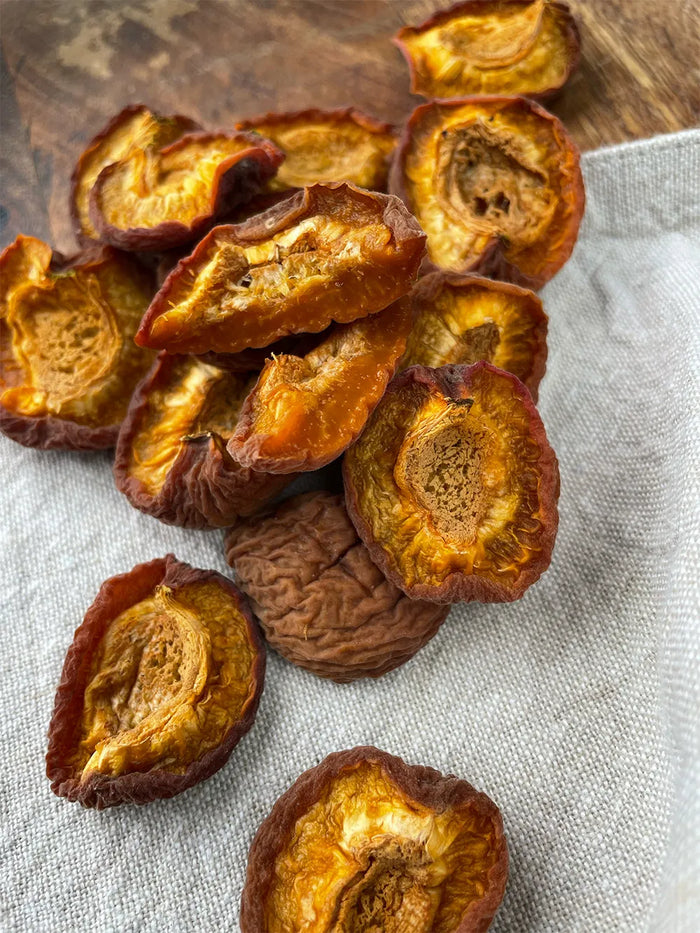
Dehydrated apricots

Apricots

The trail-mix classic, minus the added sugar of store-bought. Choose fruit with a little give for a sweeter result.

Prep
Pit; halve (push inside-out) or slice
Drying time
12–16 hours
Temperature
~55 °C
Best for
Lunchboxes, pastries, stuffing
Read the full apricot guide →

Apricots are one of the most popular fruits found in dried fruit and nut mixes and are enjoyed as a sweet, healthy snack, but the benefit of dehydrating your own apricots over purchasing dried apricots is that they’re without the stacks of sugar you’ll likely find in the store-bought varieties. As with plums and peaches, choose apricots that have a little bit of give over the super firm, unripened ones, as these will deliver a sweeter flavour post-dehydration. To prep for dehydration, we recommend removing the pit and either halving or slicing, as suggested with peaches. If keeping in halves, push the back of the apricot inward so it exposes the flesh further, which will allow for a more effective and efficient dehydration process.

Dehydrated apricots are packed with so much goodness, making them undoubtedly one of nature’s super-powerful superfoods! Rich in antioxidants and a source of vitamins and minerals, dehydrated apricots are naturally low in fat and filled with flavour. A great source of fibre, potassium and vitamin A, dehydrated apricots help to lower blood sugar and cholesterol levels, boost brain function and memory, fight off illness and disease, strengthen bones and teeth and support weight control by keeping you feeling fuller for longer.

As mentioned, dehydrated apricots are a deliciously sweet snack, perfect for school lunchboxes or to keep in your handbag or office desk drawer. Here are some other ways you can enjoy them.

  • Use for baking cakes, muffins, scones and various pies or pastries.
  • Add to morning oats, granola, cereal, porridge and yoghurt.
  • Dip in chocolate for a sweet party treat.
  • Chop and sprinkle over desserts, ice cream or salads.
  • Add to cheese boards.
  • Mix with other dehydrated fruits and nuts to create a homemade trail mix.
  • Use to make stuffing or in various meat dishes.
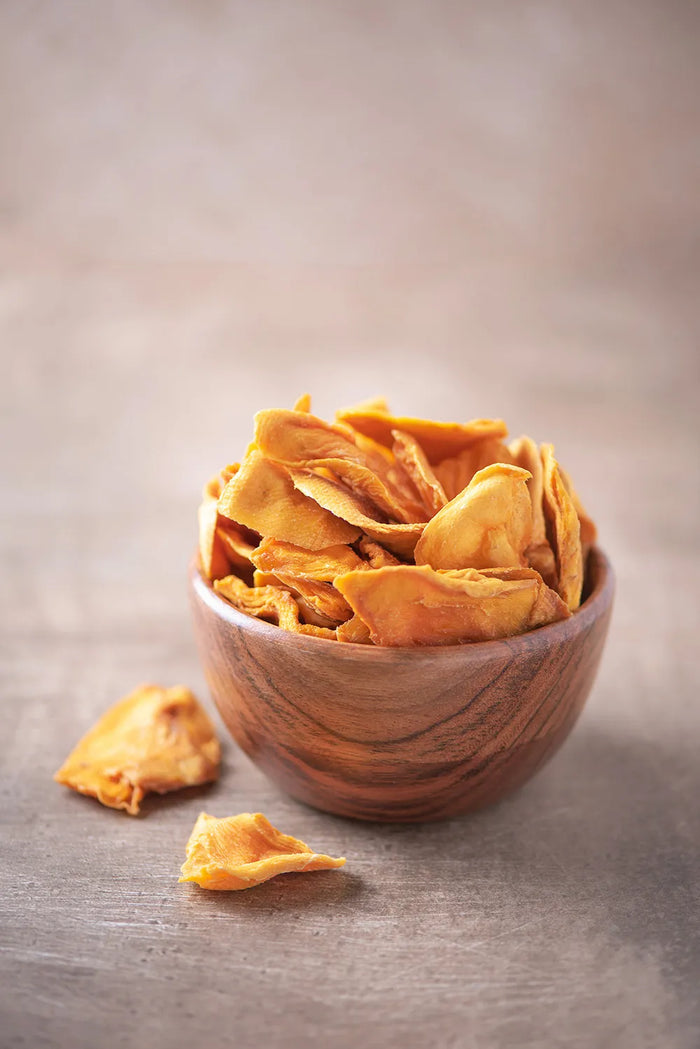
Dehydrated mango slices

Mangoes

Summer in a slice. High in natural sugar, so enjoy in moderation — or try the chilli-lime version.

Prep
Pit and peel; lengthways, just over ½ cm
Drying time
8–12 hours
Temperature
~55 °C
Best for
Smoothies, chutneys, energy balls
Read the full mango guide →

Mmmmm mangoes!! Is there a fruit that screams summer more than mangoes? The juicy, rich, sweet flavour of mangoes delivers a delicious treat and a high concentration of nutritional benefits when dehydrated, making it a favourite fruit to snack on or add to various dishes. Being that mangoes are seasonal in the warmer months, buying in bulk and dehydrating means you can store and enjoy them all year round!

Choose your mangoes for dehydrating the same way you would pick your other stone fruit — they shouldn’t be too firm, slightly soft to the touch, but not overripe. With mangoes, you want to remove the pit and the skin, gently cutting the flesh off the pit and peeling back the skin with a small knife. Whilst you can cut thicker slices (which will take longer to dehydrate), we recommend cutting the fruit lengthways, just over ½ cm in width.

Like other dehydrated fruits, dehydrated mangoes offer a more concentrated source of benefits, however, they are high in natural sugars and calories, so it’s important to enjoy them in moderation to avoid high blood sugar or weight gain. Rich in antioxidants and vitamin C, with vitamin A and B vitamins as well, dehydrated mangoes also contain folate, fibre, calcium, iron and potassium, which all deliver a tonne of benefits for both the mind and body. Some of these include improving eye health, boosting immunity, supporting digestive health, promoting healthy skin, increasing energy and reducing stress. Being high in fibre also means they will keep you feeling fuller for longer, therefore, preventing unnecessary snacking.

Some ways to enjoy delicious dehydrated mangoes? Check out our list below.

  • Before dehydrating, sprinkle with chilli powder, lime juice and sea salt to make dehydrated chilli mango.
  • Add to your morning smoothie.
  • Use as a topping on yoghurt, cereal, desserts or ice cream.
  • Chop and mix through salads.
  • Use in baking cakes, muffins, cupcakes, cookies and scones.
  • Make various chutneys, jams or sauces.
  • Create energy balls or dip slices in chocolate and crushed pistachios for a sweet treat.
  • Combine with pork and various meat dishes.
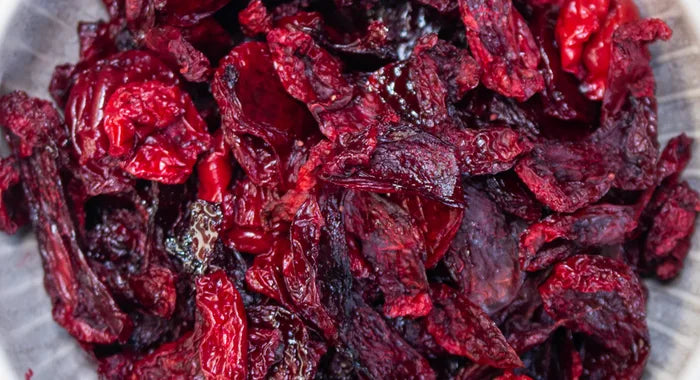
Dehydrated cherries

Cherries

A short, pricey season (June–August), so buy in bulk when cheap. Cutting is more prep, but saves hours of drying.

Prep
Halve, quarter and pit
Drying time
14–16 hours
Temperature
~55 °C
Benefits
Anti-inflammatory, supports sleep
Read the full cherry guide →

Last on our list of favourite dehydrated stone fruits are dehydrated cherries. In Europe, cherry season peaks in the height of summer typically June through August and lasts only a short few months. Because fresh cherries have such a limited season and can be expensive, purchasing them in bulk when they’re more affordable and preserving them through dehydration allows you to enjoy their sweet flavour throughout the year.

Prior to dehydrating, discard any overly soft cherries — we don’t want them overripe — and remove the pit. Because cherries are rather small, de-pitting them can be a tedious task, but we recommend cutting them in half and then into quarters — you can keep the stem in whilst cutting if this makes them easier to hold, then remove it before loading onto the dehydrating trays. Although whole cherries are delicious, cutting them ensures a faster drying time and a more even result. It may require a little more prep work, but will save you hours when dehydrating.

Dehydrated cherries provide many benefits and are a source of vitamin C, potassium and fibre, along with small amounts of minerals such as calcium and iron. They’re high in antioxidants which help to prevent illness and have anti-inflammatory and pain-relieving properties. They can assist in lowering cholesterol, improving digestion, and even supporting relaxation and better sleep.

As with other stone fruits, there are many ways to use dehydrated cherries to add flavour and fun.

  • Add to morning oats, granola, porridge or yoghurt.
  • Use in baking cakes, muffins, scones, cookies and Black Forest-style desserts.
  • Mix with nuts and dark chocolate pieces for a homemade trail mix.
  • Add to cheese and charcuterie boards — they pair beautifully with soft cheeses.
  • Make rich sauces for duck, pork or game dishes.
  • Use as a garnish for cocktails such as an Old Fashioned or Manhattan.
  • Stir through salads, rice or couscous for a hit of sweetness.

More stone fruit to try

There is an abundance of stone fruits you can use to create delicious dehydrated treats to enjoy all year.

Also worth trying: Nectarines, Coconuts, Dates, Lychees.

Other fruit

Everything that isn’t citrus, berry or stone fruit — including some of the easiest and most popular fruits to dry at home or for a bar, café or restaurant.

Read the full introduction to other fruit →

So, we’ve covered citrus, berries and stone fruits, but what about all the other nutritious and delicious fruits that don’t fall into either of these three categories? With so much goodness, flavour and ways you can enjoy these dehydrated fruits either at home or if you’re running a bar, cafe or restaurant we had to share and add these to the list of favourites. Don’t forget to check out our cost comparison too. So, what are some of our other go-to fruits for dehydrating? Check out our list below.

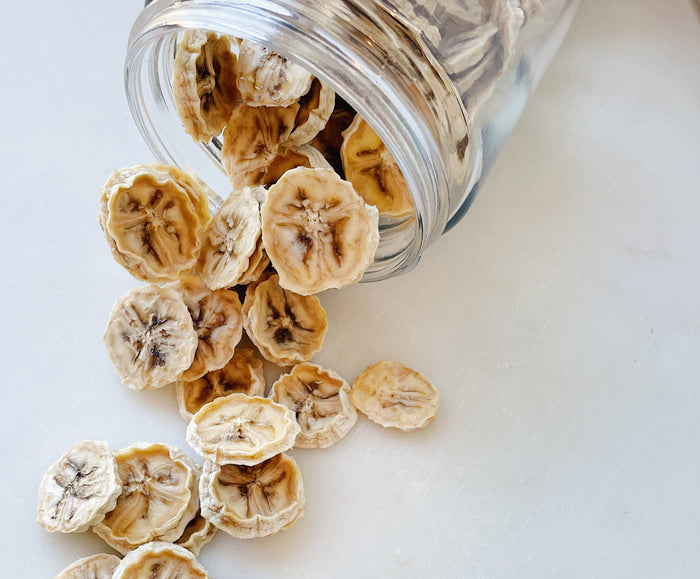
Dehydrated banana chips

Bananas

The fastest way to stop bananas going to waste. Lightly speckled fruit gives the sweetest chips.

Prep
Peel, slice across ~½ cm; pre-treat
Drying time
8–12 hours
Temperature
~55 °C
Best for
Cereal, trail mix, banana bread
Read the full banana guide →

We all know how quickly bananas can turn bad, so if you’re not freezing them for smoothies or waiting for them to go super ripe for banana bread, then why not preserve them through dehydration — preventing unnecessary food wastage and creating a healthy snack in the process.

If you’re buying bananas in bulk specifically for dehydrating, choose bananas that have slight brown speckling rather than overripe or bananas that are still too green. This will ensure you get maximum sweetness from your dehydrated banana chips. The prep for dehydrating bananas is super easy — simply peel and slice bananas across, anywhere from just under ½ cm to just over. You can cut them in wedges, but slicing them this way will allow them to dry easier and faster.

Being that the water content is removed during dehydration, dehydrated bananas have a high concentration of nutrients. Rich in potassium, with fibre, magnesium and vitamin B6 as well, dehydrated bananas are also high in antioxidants which boost immunity and improve mental well-being. Other benefits include supporting heart and blood health, increasing energy and endurance, promoting healthy digestion and maintaining healthy skin and bones.

Ways to enjoy dehydrated bananas? See below.

  • Use as a topping for cereal, oats, porridge or yoghurt.
  • Dip in yoghurt or peanut butter for added sweetness.
  • Mix with nuts and other dried fruits for a healthy trail mix.
  • Dust with cinnamon or sugar for added flavour.
  • Use in cakes, muffins, banana bread or homemade bars.
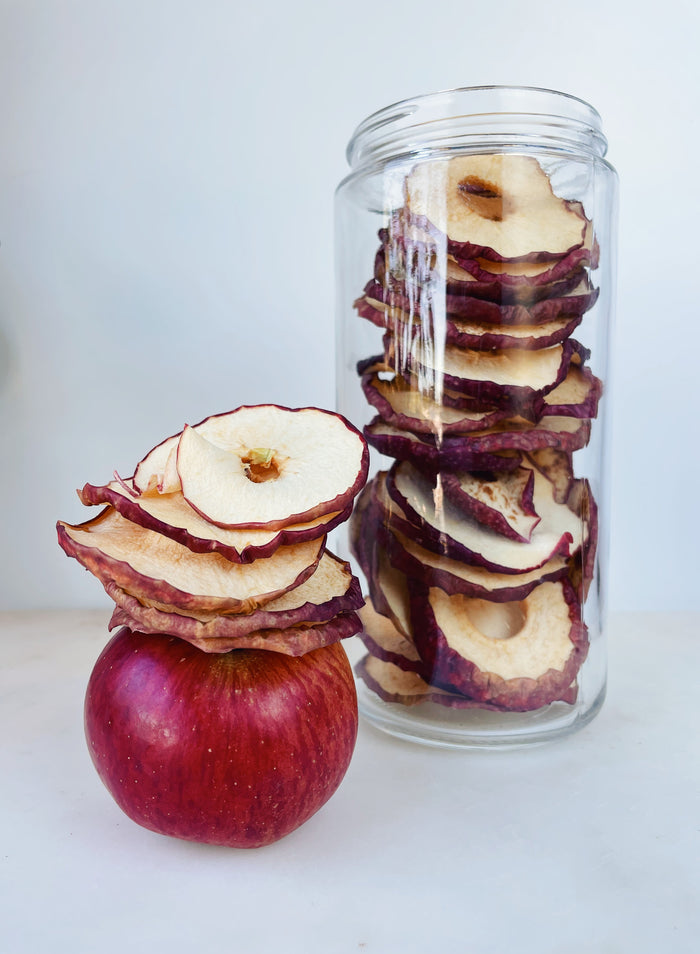
Dehydrated apple chips

Apples

Crisp chips or chewy rings — your choice, depending on how long they stay in. Stock up in September–October.

Prep
Core, ½ cm rings; lemon juice dip
Drying time
8–12 hours
Temperature
~55 °C
Best for
Lunchboxes, mulled wine, décor
Read the full apple guide →

Dehydrated apples provide a sweet, nutritious snack that’s perfect for the kids’ lunchboxes or in a variety of dishes. You can dehydrate apples, so they’re more crispy — think dehydrated apple chips — or take them out a little earlier for a chewy texture (still just as delicious!).

When apples are cut, it doesn’t take long for the flesh to discolour and turn brown — this is called oxidation. Whilst this is mainly cosmetic, you can pre-condition sliced apples in lemon juice prior to dehydrating to minimise the discolouration or get them in your dehydrator quickly after cutting, which will preserve the colour too. To prep for dehydration, cut in quarters to remove the core, then slice or cut into rings approximately ½ cm in thickness. Sort out and discard any apple that shows decay, bruising or mould. [1]

Dehydrated apples, like other fruits, have high levels of nutrients that provide a heap of health benefits. Dehydrated apples contain vitamin C along with some B vitamins, which boost metabolism and nourish the skin. Packed with fibre and potassium, dehydrated apples improve blood and digestive health, support mental focus and well-being and keep teeth and gums healthy. You know the saying an apple a day keeps the doctor away!

Whilst you can grab apples year-round in Europe, apple picking season typically runs from September through to October — this makes it a perfect time to stock up when apples are in their prime and dehydrate them to enjoy their benefits throughout the year. Whether you’re dehydrating Red Delicious, Granny Smith or Pink Lady apples, they will all deliver a slight variance of flavour, but their sweet or tart taste will be intensified following dehydration.

As mentioned, dehydrated apples are a fantastic snack for kids and adults alike and can be used in a variety of ways to add flavour to dishes. See some of our suggestions below.

  • Chop and add to mixed nuts or homemade trail mix.
  • Dip in yoghurt or peanut butter as a snack.
  • Add on top of oats, cereal, muesli, porridge or yoghurt.
  • Use in baked goods like pies, bread, scones, muffins or cakes.
  • Add as a garnish to hot drinks like a Hot Toddy, mulled wine or cider.
  • Use in Christmas decorations or add to potpourri.
  • Include on a cheese board.
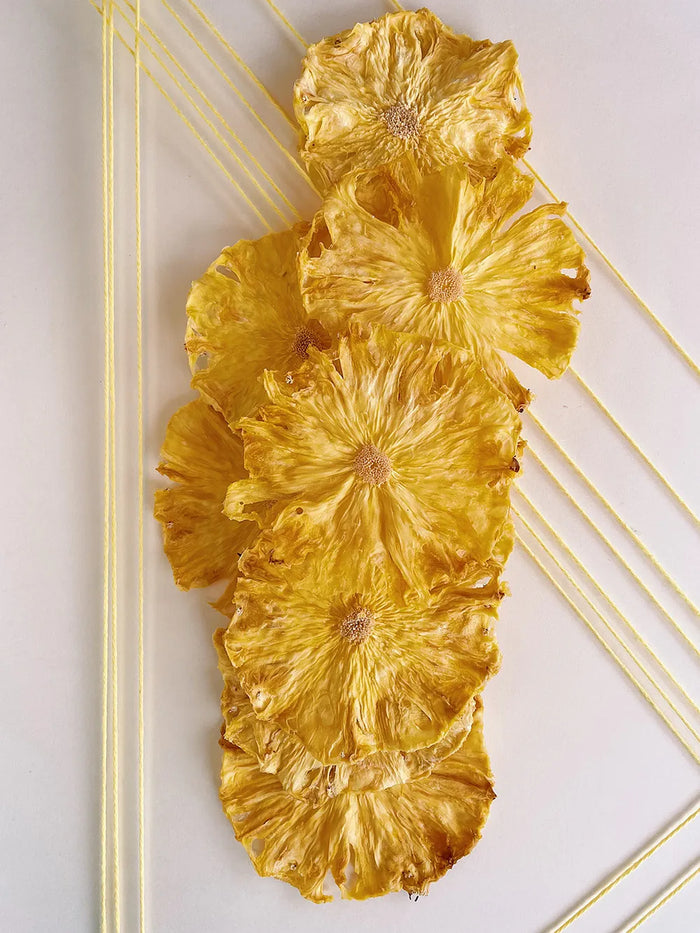
Dehydrated pineapple rings

Pineapple

Consistently dries well to a slightly chewy texture. Fresh lasts days; dried lasts months. Tinned works too — drain it well and choose fruit in juice, not syrup.

Prep
Skin and core off; ½–1¼ cm
Drying time
12–16 hours
Temperature
~55 °C
Best for
Puddings, curries, cocktails
Read the full pineapple guide →

No other fruit screams summer quite like juicy, fresh pineapple, and it’s one of our favourite fruits for dehydrating! In Europe, pineapple is imported and available all year round, but the peak season for enjoying the freshest fruit is from March through to July. When buying fresh pineapple, it’s recommended that you eat it within 2 days if kept at room temperature or no longer than a week if refrigerated. Tinned pineapple is also a great option if fresh isn’t available, offering convenience and consistent quality for dehydration. Drain tinned pineapple well, and choose fruit in juice rather than syrup so the slices don’t stay sticky.

Dehydrating pineapple not only maintains all that incredible, zesty, sweet flavour of fresh pineapple with minimal mess, but it also provides a much longer shelf life — meaning you can enjoy it for months on end. To prepare pineapple for dehydration, remove all of the outer layer and core before cutting it into pieces or ring slices of anywhere between ½ cm thickness to 1¼ cm thickness — keep in mind that the thinner the slice, the quicker it will take to dehydrate. Dehydrated pineapple will have a slightly chewy texture and is one of those fruits that consistently dehydrate well.

Dehydrated pineapple contains manganese, vitamin C and B vitamins, as well as calcium, potassium and fibre, providing numerous health benefits to both the mind and body. Some of these benefits include increasing collagen levels in the skin, boosting the immune system, strengthening hair and bones, supporting gum and dental health, and assisting with digestion. Dehydrated pineapple also contains antioxidants, protecting the body against illness and disease.

Although super delicious and one of our favourite dehydrated fruits to enjoy on its own as a snack, there are many ways to enjoy dehydrated pineapple. See our suggestions.

  • Add to breakfast dishes like oats, porridge, cereal and yoghurt.
  • Combine with nuts and other fruits to add flavour to trail mix.
  • Use in desserts such as puddings — delicious in rice pudding or chia seed pudding!
  • Add to baked goods, including muffins, scones, cakes or cupcakes.
  • Perfect in savoury dishes such as stir fries, curries, pork dishes or sweet and sour sauces.
  • Add to herbal teas for extra sweetness or as a garnish for cocktails.
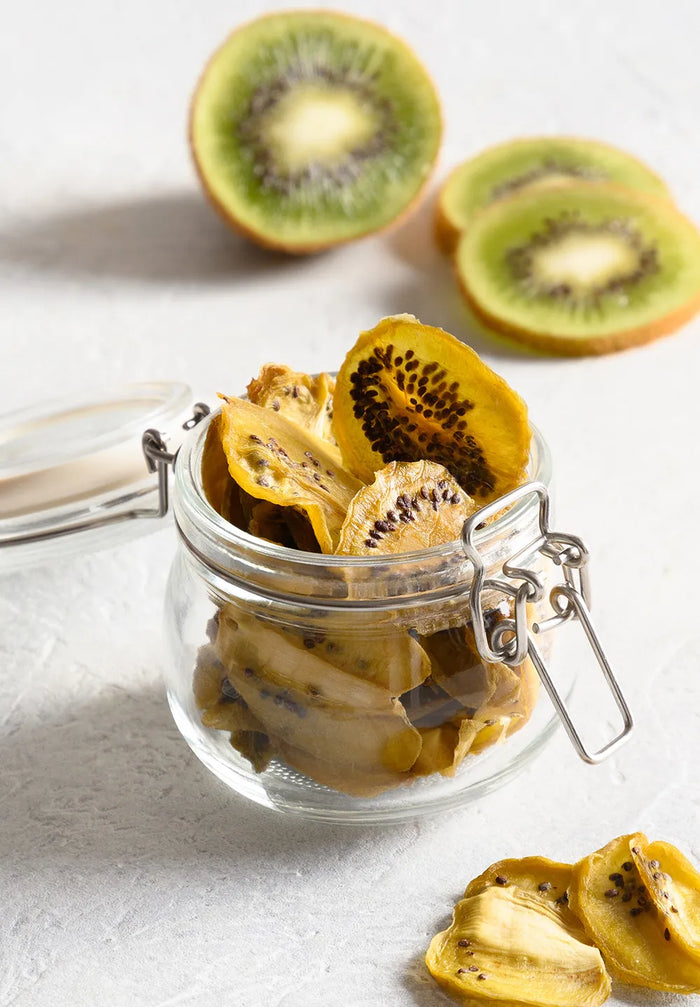
Dehydrated kiwi fruit slices

Kiwi fruit

One of the easiest fruits to dehydrate — perfect for beginners. Dries to a soft, chewy slice.

Prep
Skin optional (wash well); ½ cm
Drying time
10–12 hours
Temperature
~55 °C
Best for
Smoothie bowls, garnish, cakes
Read the full kiwi fruit guide →

Kiwi fruit is one of the easiest fruits to dehydrate — perfect if you’re a beginner or just dipping your toe in the dehydrating pool. Simple to prepare, you can peel off the skin if you wish or keep it on, but ensure you thoroughly wash the skin if you choose to do so (the skin is actually edible!). We recommend slicing at approximately ½ cm thickness to maintain efficient and effective dehydration, and the result should be a soft, chewy texture.

In Europe, kiwi fruit is in season from November through to May, making it the perfect time to stock up and dehydrate them when they’re at their peak, so you can enjoy their benefits all year round. Depending on which kiwi fruit you dehydrate, some will deliver a super sweet flavour, whilst others will be slightly sour and tart. Either way, both provide a delicious flavour, making them a perfect nutritious snack for the whole family.

High in vitamin C, a good source of vitamin K and fibre, and rich in antioxidants, kiwi fruit supports the immune system, boosts the skin’s appearance, strengthens hair and bones, and assists with weight management by reducing feelings of hunger. Dehydrated kiwi fruit also helps with digestion, lowers blood pressure, and can even assist with sleep and mental wellness.

There are many ways to enjoy dehydrated kiwi fruit — some of our favourites are listed below.

  • Sprinkle with sugar pre or post-dehydration to add sweetness to more sour kiwi fruit.
  • Add as a topping to breakfast dishes such as oats, porridge and cereal.
  • Use as topping on smoothie bowls for added crunch.
  • Perfect as a cocktail or drink garnish.
  • Add to water for a hint of flavour.
  • Chop and stir through salads for a touch of sweetness.
  • Use to decorate desserts or cakes.
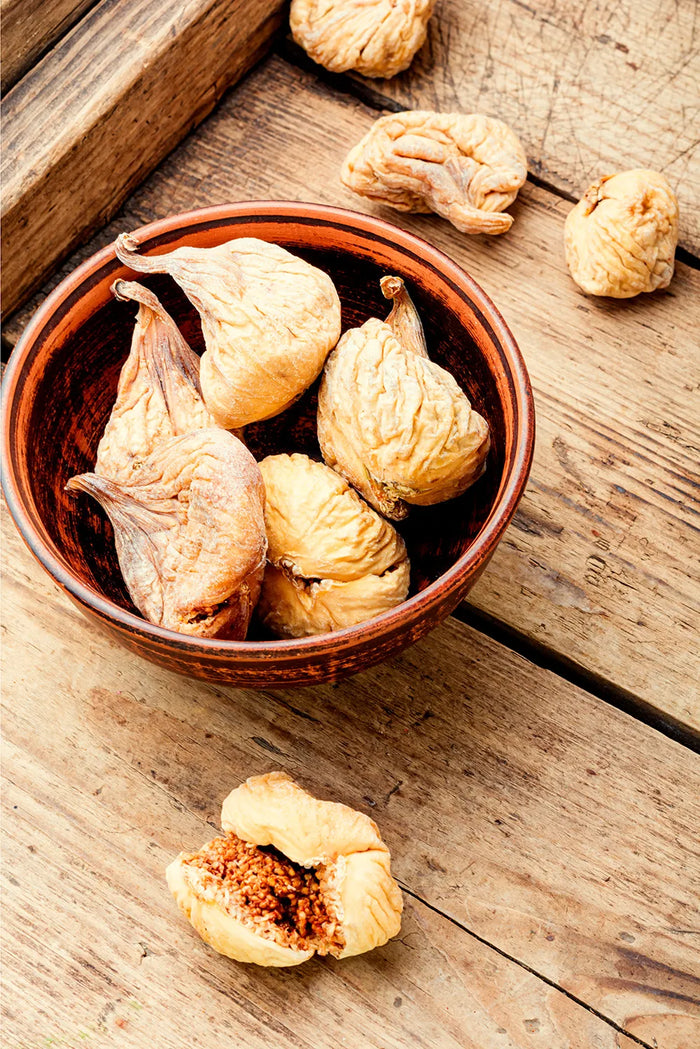
Dehydrated figs

Figs

A very short fresh season. Cut figs dry quicker and keep longer. A natural post-workout snack.

Prep
Whole, halved, quartered or sliced
Drying time
14–18 hours
Temperature
~55 °C
Best for
Cheese boards, prosciutto, tarts
Read the full fig guide →

Whilst fresh figs are only in season for a very short time in Europe (late summer to early autumn), dehydration allows you to preserve and enjoy them for much longer periods. When it comes to dehydrating figs, you can keep them whole or choose to half or quarter them, keeping in mind that when they’re cut, they will dry quicker and keep longer, as more moisture has been removed from the fruit. You can, of course, slice figs too, which ensures even faster and more effective dehydration and makes them a perfect lightweight snack or addition to breakfast dishes.

Dehydrated figs are rich in calcium, potassium and fibre and contain vitamin K and antioxidants. Dehydrated figs help to improve digestion, boost the appearance of skin and hair, strengthen bones, improve mental focus, and protect the immune system. Being high in fibre and containing natural sweeteners, dehydrated figs can also support weight management by curbing hunger cravings and increasing feelings of fullness. It is important to be mindful, however, that dehydrated figs are more concentrated in calories and sugars, so should be enjoyed in moderation. That being said, they are perfect as a post-workout snack to replenish glycogen levels and support muscle recovery.

We all know figs are delicious on their own, but they make a great addition to various recipes and dishes. Here are some of our favourite ways to use dehydrated figs at home or if you’re running a business.

  • Add to cheese and charcuterie boards for added colour and flavour.
  • Use in desserts and baking, including cakes, muffins, cheesecakes, pies, tarts, puddings and cookies.
  • Delicious addition to various salads.
  • Use as a topping on morning oats, cereal, porridge, granola or yoghurt.
  • Wrap in prosciutto for a delicious sweet/savoury combo.
  • Perfect as a drink or cocktail garnish.
  • Add on top of pizza or toast with ricotta.

More fruit to try

There really is an endless variety of fruits you can dehydrate to maximise their flavour and benefits. Get creative!

Also worth trying: Grapes, Dragon fruit, Cantaloupe melon, Pears, Rhubarb (stalks only — the leaves are poisonous).

Choosing a machine

Which dehydrator do you need for fruit?

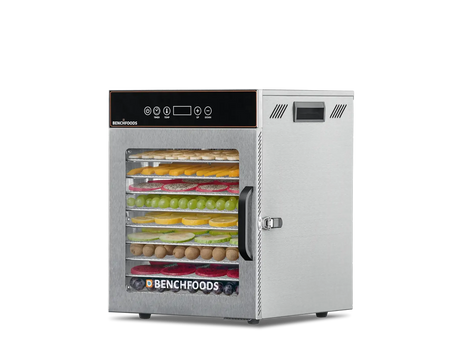
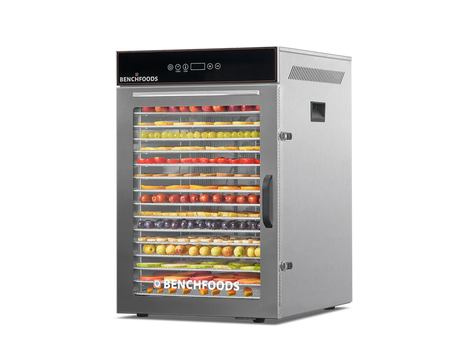
Every BenchFoods machine is 304 food-grade stainless steel with precise low-temperature control — the steady 45–60 °C range fruit needs to dry without case hardening. The only question is how much you’re drying.

Talk to a specialist →
1 Zone / 10 Tray / 0.6 m²

Home kitchens

1 Zone / 10 Tray / 0.6 m²

Room for a week of lunchbox snacks or a season’s worth of citrus garnishes, on a compact kitchen footprint.

€239€369

View machine
1 Zone / 16 Tray / 2.56 m²

Bars, cafés & restaurants

1 Zone / 16 Tray / 2.56 m²

Built for volume: keeps a bar stocked with citrus wheels and a café stocked with breakfast toppings.

€839€1.395

View machine
3 Zone / 30 Tray / 4.8 m²

Producers & growers

3 Zone / 30 Tray / 4.8 m²

Three independent zones — run citrus low, stone fruit at 55 °C and berries for longer, all in one batch.

€2.099€3.449

View machine

Pre-treating fruit: lemon juice vs ascorbic acid

Pre-treatment keeps fruit looking and tasting its best. It holds nutritional value and flavour, and stops the browning (oxidation) that bananas, apples and peaches are prone to at drying temperatures. There are two easy options.

Lemon juice

Popularity
The most popular method
Mix
1 cup lemon juice : 4 cups water
Apply
Soak each piece in a bowl, or spray to coat
Soak time
Until coated
Flavour
Can add a slight lemon tang — pleasant on apples
Before drying
Remove excess liquid — pat dry or use a salad spinner

Ascorbic acid (vitamin C)

Popularity
Same method, no citrus flavour
Mix
2 tsp ascorbic acid : 4 cups water
Apply
Soak each piece in a bowl
Soak time
3–5 minutes
Flavour
Neutral
Before drying
Pat dry with a towel or paper towel
Note

Browning is mainly cosmetic. If colour matters (garnishes, gifts, décor), pre-treat. Getting cut fruit into the dehydrator quickly also helps preserve colour. Extension services give the same ascorbic acid mix as this page: 1 teaspoon per 2 cups of water, soaked for 3–5 minutes. [1]

Which fruits need pre-treating?

Which fruits need pre-treating, with browning risk and treatment
FruitBrowning riskRecommended treatment
Apples, bananas, peachesHighLemon juice or ascorbic acid solution, then pat dry
Other stone fruitMediumRinse in salted water, drain and dry thoroughly
Lemons & limesMediumDry at no more than 45 °C — they darken quickly above it
Whole berries, small plumsLowBreak the skin — pierce, blanch or cut
Frozen fruitLowNone needed for colour — rinse briefly to separate, then dry. Frozen berries need extra care: see Food safety
Read the full pre-treatment section →

Pre-treating fruit for dehydration will not only help to maintain the nutritional value and flavour of the fruit, but it will also help prevent browning or oxidation, which can occur quite easily with particular fruits at higher temperatures. Bananas, apples and peaches are prone to oxidation, but with a simple pre-treatment, you can keep them looking and tasting great. Two easy ways to pre-treat fruit are either with lemon juice or ascorbic acid (vitamin C).

Lemon juice pre-treatment

This is the most popular way to pre-treat fruit for dehydration but be mindful that using a fruit with a high amount of citric acid can change the flavour slightly of the fruit you’re dehydrating, especially if you’re using lemon juice that’s undiluted. This can actually be pleasant to taste, especially with apples, but if you prefer to keep the lemon flavour to a minimum, follow our suggestions below.

  • Combine 1 cup of lemon juice with 4 cups of water in a bowl or mix and use in a spray bottle.
  • Soak each piece of cut fruit in the bowl or spray directly to ensure the fruit is coated.
  • Make sure you remove excess liquid from the fruit before dehydrating, either with a salad spinner or preferably patting dry with a clean towel or paper towel to absorb any moisture.
Ascorbic acid pre-treatment

Using the same method as above, ascorbic acid can be used in the pre-treatment of fruits for dehydration. See our steps below.

  • Mix 2 teaspoons of ascorbic acid with 4 cups of water in a bowl.
  • Soak each piece of cut fruit in the ascorbic acid solution for 3–5 minutes and pat dry with a towel or paper towel to remove any excess moisture before dehydrating.

What else you can make

Snacking is only the start. The same fruit becomes leathers, powders, drink garnishes and decorations.

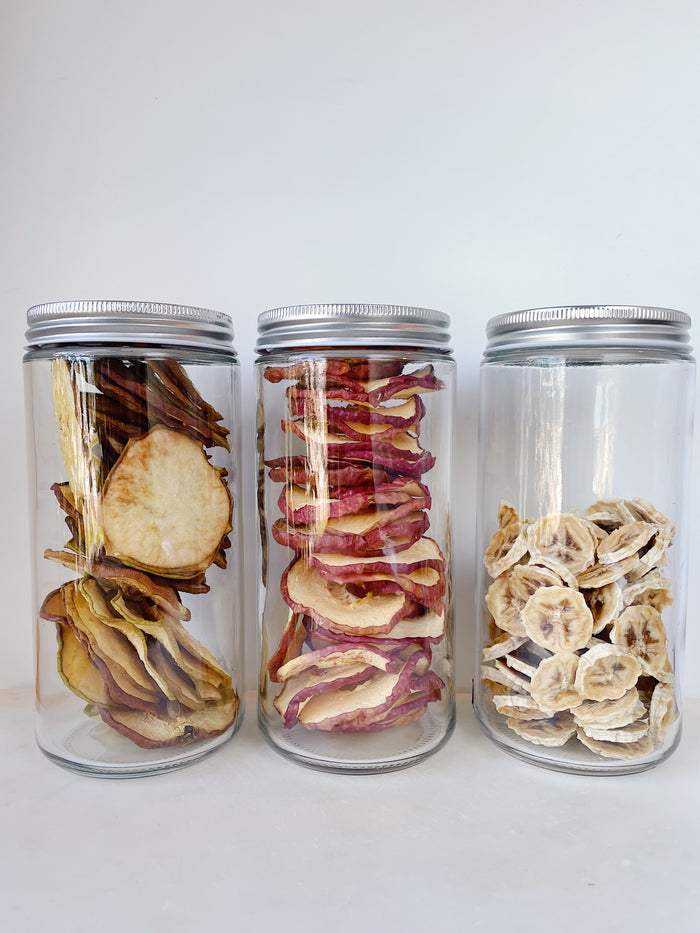
Jars of dehydrated apple, pear and banana

Fruit leather

Blend berries alone or with peaches, apples or mangoes, spread thin and dry. The perfect lunchbox snack.

Base
Berries or stone fruit
Tray
Solid non-stick mat
For
Lunchboxes, after-school
Dried berries ready for powdering

Fruit powders

Grind fully dried berries into powder to stir through yoghurt, cakes, muffins and pancakes for colour and sweetness.

Base
Berries, dried crisp
Use
Baking, yoghurt, smoothies
Guide
Dehydrated powders
Dehydrated fruit in herbal tea

Drink garnishes

Citrus wheels for cocktails, strawberries in champagne, apple in mulled wine, pineapple in herbal tea.

Base
Citrus, berries, apple, kiwi
Colour
Grapefruit holds it best
For
Bars, restaurants, gift jars
Dried orange slices for decoration

Décor & potpourri

Citrus and apple slices for wreaths, Christmas trees, gift wrapping, display jars and citrus bath infusions.

Base
Oranges, citrus mix, apples
Tip
Pre-treat for brighter colour
For
Christmas, gifts, display
Premium silicone non-stick solid mat

Accessory

Premium silicone non-stick solid mats

Fruit leather, purées and sticky high-sugar fruit like figs and mango peel straight off. Sized for the 10-tray domestic range.

Shop mats

Homemade vs store-bought dried fruit: the cost

Pre-packed dried fruit is sold in small quantities at high prices. Here’s what the same fruit costs fresh from an EU supermarket.

Store-bought dried fruit compared with fresh fruit at an EU supermarket
FruitGroupStore-bought driedFresh @ EU supermarket
OrangesCitrus€9.00 — 30 g pouch (approx 8–12 slices)€3.50 per kg (approx 5 oranges)
LemonsCitrus€9.00 — 30 g pouch (approx 15–20 slices)€1.20 each
LimesCitrus€9.00 — 30 g pouch (approx 30 slices)€4.90 per 5-pack (€0.98 per lime)
BlueberriesBerries€17.95 — 200 g pouch€2.50 per 125 g
StrawberriesBerries€37.95 — 100 g jar€1.80 per 250 g punnet
Raspberries (organic)Berries€9.50 — 100 g pouch€4.50 per 125 g punnet
ApricotsStone fruit€5.00 — 400 g pouch (approx 8–12 slices)€3.96 per kg
PeachesStone fruit€5.00 — 200 g pouch (approx 15–20 slices)€3.96 per kg
MangoesStone fruit€6.00 — 150 g pouch (approx 10–15 slices)€2.90 each
BananasOther fruit€41.00 — 1 kg pouch€0.81 each
ApplesOther fruit€3.84 — 200 g€4.50 per kg (approx 5 apples, €0.90 each)
Kiwi fruitOther fruit€10.95 — 30 g5 for €4.00
About these prices

Prices are indicative EU retail examples. Fresh fruit loses most of its weight as water during drying, so compare by finished quantity rather than weight.

How to dehydrate fruit

Six steps, whatever the fruit. The biggest factor in a good batch is consistency — every piece cut the same, so every piece finishes at the same time.

  1. Choose ripe, unblemished fruit

    Pick fruit with good colour and fragrance that’s slightly soft to the touch — not overripe, and with no bruising or brown spots. Riper fruit tastes sweeter once dried; firmer fruit dries faster. Discard any fruit showing decay or mould.

    • Slightly soft, not overripe
    • No bruising
    • Buy in season, in bulk
  2. Prep and slice to uniform thickness

    Wash the fruit under running drinking water (and wash your hands and equipment), then peel, pit or core as the fruit needs. Slice citrus 6–7 mm with the rind on and most other fruit around ½ cm. Small berries can stay whole, but the skin must be broken — pierce, blanch or cut.

    • ½ cm for most fruit
    • 6–7 mm citrus
    • Slices dry faster than halves
    • Wash fruit and hands
  3. Pre-treat fruit that browns

    Apples, bananas and peaches oxidise quickly. Soak or spray them in a lemon juice or ascorbic acid solution, or rinse stone fruit in salted water. Always pat dry before loading.

    • 1:4 lemon juice to water
    • Pat dry before drying
  4. Load the trays in a single layer

    Lay pieces so they don’t touch or overlap. Skin-on stone fruit goes skin side down; push halved apricots inside-out to expose more flesh. Use a solid mat for purées and fruit leather.

    • No overlapping
    • Skin side down
  5. Dry low and steady

    Run most fruit at around 55 °C, and lemons and limes at no more than 45 °C. Don’t push the temperature up to save time — it causes case hardening. Check progress periodically.

    • ~55 °C most fruit
    • 45 °C lemons & limes
    • 6–24+ hours
  6. Test, cool and condition

    Fruit is done when it’s leathery and flexible — not sticky, not brittle. Tear a piece: there should be no moisture in the middle. Cool to room temperature, then condition in a jar for 7–10 days before storing.

    • Leathery & flexible
    • Tear test the centre
    • Condition 7–10 days

Prep differences by fruit group

Citrus

Rind on, rounds of 6–7 mm. Lemons and limes darken easily — keep them at 45 °C or below.

Berries

Break the skin or cut. Strawberries: stems off and slice across. Raspberries and blackberries: halve.

Stone fruit

Halve or quarter to pit, then slice larger fruit. Skin optional — skin side down. Salted-water rinse for colour.

Other fruit

Peel bananas and pineapple; core apples into rings. Kiwi skin is edible if washed. Figs can stay whole.

Fruit drying time chart

Times assume fruit is sliced rather than dried whole. Drying time depends on water content and thickness — and on the texture you want, since crisp takes longer than chewy.

Drying time and temperature for each fruit
FruitGroupDrying timeTempNotes
Oranges & blood orangesCitrus16–18 hours~55 °CRind on, 6–7 mm slices. Sweeter oranges give a sweeter result.
GrapefruitCitrus16–18 hours~55 °CHolds its pink-orange colour better than any other citrus.
LemonsCitrus18–24+ hours45 °C maxDarkens very easily above 45 °C — keep it low to hold the yellow colour.
LimesCitrus18–24+ hours45 °C maxDarkens very easily above 45 °C — keep it low to hold the green colour.
BlueberriesBerries14–16 hours~55 °CBreak the skin first — pierce, blanch or halve.
StrawberriesBerries6–10 hours~55 °CStems off, slice across to ½ cm. Fastest fruit on the chart.
RaspberriesBerries10–12 hours~55 °CHalve before drying to speed things up.
BlackberriesBerries14–16 hours~55 °CCut to speed drying. Seeds stay tart after drying.
CranberriesBerries14–16 hours~55 °CCut or break the skin. Keeps about 12 months when fully dry.
PlumsStone fruit12–16 hours~55 °CPit and slice. Small plums can dry whole if blanched first.
PeachesStone fruit8–12 hours~55 °CQuarter to remove pit, slice evenly. Pre-treat against browning.
ApricotsStone fruit12–16 hours~55 °CHalve or slice. Push halves inside-out to expose the flesh.
MangoesStone fruit8–12 hours~55 °CRemove pit and skin; slice lengthways just over ½ cm.
CherriesStone fruit14–16 hours~55 °CHalve, quarter and pit. Cutting saves hours of drying.
BananasOther fruit8–12 hours~55 °CUse lightly speckled fruit; slice across ~½ cm.
ApplesOther fruit8–12 hours~55 °CCore and cut ½ cm rings. Longer for crisp chips, shorter for chewy.
PineappleOther fruit12–16 hours~55 °CSkin and core off; ½–1¼ cm slices. Tinned works too.
Kiwi fruitOther fruit10–12 hours~55 °CSkin optional (wash well). ½ cm slices. Easiest for beginners.
FigsOther fruit14–18 hours~55 °CWhole, halved, quartered or sliced — cut dries faster and keeps longer.
How to tell

Treat these times as a starting guide — thickness, humidity and how full the trays are all change them. Fruit is done when it’s leathery and flexible with no visible moisture in the centre. High-sugar fruit like dates and prunes stays tacky even when fully dry; that’s normal. To check, cut a cooled piece in half: there should be no visible moisture and none should squeeze out. Berries should rattle when shaken. [1][3]

Read the full drying times section →

The length of time it takes to dehydrate fruit is really dependent on the water content and how thick the fruit is cut. As mentioned above, thinly sliced fruit will dry faster and more evenly than fruit that’s quartered, halved or left whole, so this is something to consider when preparing fruit for dehydration. Most fruits can take anywhere from 8 hours up to 24+ hours, with berries sometimes needing around 24-48 hours to remove all of their moisture.

Another thing to consider when it comes to drying times is the desired result and texture you’re trying to achieve. For example, if you want your apple slices to be crispy like a chip, that will take slightly longer than if you prefer your apples to have a chewier texture. Use our guide below as just that — a rough guide for drying times based on fruits being sliced rather than dehydrating them whole. We recommend monitoring the progress of your fruits to ensure you get the texture you’re after.

Citrus: most citrus takes 16–18 hours at around 55 °C. *You can lower the temperature to limit browning, but allow more time (18–24 hours). We recommend drying lemons and limes at around 45 °C.

How to store dried fruit

Dried fruit still holds around 20% moisture, and some pieces always end up drier than others. Conditioning evens that moisture out before storage, which reduces the risk of mould. Stored cool and dark, dried fruit keeps for about 6–12 months. [1][2][3]

Conditioning in 4 steps

  1. Check every piece. If you still sense moisture, keep dehydrating.
  2. Cool to room temperature before it goes in a container.
  3. Pack it loosely in a clean, dry jar, leaving room to shake.
  4. Shake daily for 7–10 days. If pieces stick or beads of moisture form, put them back in the dehydrator.
Critical — when to discard

If you see any mould at all, discard the whole batch.

It means some of the fruit wasn’t completely dry before conditioning, and the moisture has spread through the container.

Storage containers compared
ContainerBest forWhy
Glass jars RecommendedConditioning and long-term storageYou can see the fruit — condensation or mould is easy to spot early
Airtight containersGeneral pantry storageKeeps out air and humidity
Zip lock bagsSmaller quantities eaten soonConvenient for short-term use and portioning

Practical storage habits

  • Store in a cool, dark, dry place, away from light and heat. Extension guidance is about 12 months at 15 °C but only about 6 months at 27 °C.
  • Cut fruit to a similar thickness so it dries evenly in the first place.
  • In a warm or humid kitchen, keep dried fruit in the fridge or freezer.
  • Never skip the 7–10 day conditioning check before long-term storage.
  • Check stored fruit now and then: if it feels soft or sticky, or moisture has formed inside the jar, put it back in the dehydrator. Discard anything with mould.
Read the full storage section →

Because fruits retain an approximate moisture level of 20% post-dehydration and to ensure you get the most out of your dehydrated fruit, it’s important to condition and store your fruit correctly. Following the dehydration process, you may find that some pieces of fruit are dryer than others — this is why it’s so important, where possible, to cut fruit at a similar thickness to allow for even drying. Conditioning prevents mould from developing when fruits are stored in a container by balancing the humidity levels across all pieces of dehydrated fruit. Follow our steps below for best conditioning practices post-dehydration.

  • Check all pieces of fruit after dehydrating to ensure they’re all dry — if you still sense moisture, continue dehydrating.
  • Allow all pieces of fruit to return to room temperature post-dehydration.
  • Place fruit in an airtight container (jars are a good choice because you can see the fruit easily) and pack it loosely, leaving a little room so you can shake the contents of the container.
  • Over the next 7–10 days, shake the contents of the container to check that the fruit doesn’t stick and can move freely. You also want to look out for any moisture beads on the container and be sure that the fruit doesn’t stick to the sides of the container or to each other without coming off with ease. If either of these occurs, remove them and put them back into the dehydrator for further drying.
  • If you notice any mould at all, discard all of the dehydrated fruit. This means some of your dehydrated fruit wasn’t completely dry before conditioning.

To ensure you get the most out of all your hard work, it’s important to consider what type of containers are best for the storage of your dehydrated fruit. At BenchFoods, we recommend using jars, but you can also use airtight containers or even zip lock bags if you’re planning on storing smaller quantities or enjoying your dehydrated fruit within a shorter period.

It’s best to store your dehydrated fruits in a cool, dark place, away from light and heat that could potentially impact the quality of the fruit and affect its shelf life. Properly dehydrated, conditioned and stored dehydrated fruits can last about 6–12 months.

Food safety: what the law requires and what we recommend

Drying keeps fruit for months, but it does not make unsafe fruit safe. This section separates what EU law requires from what food-safety bodies recommend.

At home: no legal requirement, but good practice matters

EU food-hygiene law (Regulation (EC) No 852/2004) does not apply to food prepared, handled or stored at home for private domestic consumption. [7] That describes the scope of the law; it is not a promise that home-dried fruit is safe. The practices below are recommendations from food-safety bodies, not legal requirements. For EU-level consumer guidance, see EFSA’s Safe2Eat campaign. [6]

If you sell what you dry

As soon as you sell dried fruit at a market, in a café or to a shop, you are a food business. In the EU that means notifying your local competent authority and working to procedures based on HACCP principles, [7] and labelling allergens, including sulphur dioxide and sulphites above 10 mg/kg. [8] Nutrition and health claims on labels and adverts must meet the conditions of the EU claims regulation, and health claims must be on the EU register of authorised claims. [9] Requirements also differ by country, so check with your national or local authority.

Recommended practice for drying fruit at home

  • Wash raw fruit under running drinking water before cutting. AGES advises at least 30 seconds, rubbing where possible. Wash your hands, boards and knives too.
  • Use only sound fruit. Sort out and discard anything showing decay, bruising or mould.
  • Load the trays soon after cutting. The BfR advises that cut fruit is eaten promptly or kept in the fridge, because any germs already on the fruit can multiply once it is cut.
  • Drying removes water; it does not sterilise. Dry until there is no visible moisture, condition for 7–10 days, then store airtight in a cool, dark place.
  • If you see mould at any stage, discard the whole batch.
Frozen berries

Drying does not remove norovirus or hepatitis A.

Frozen berries have caused norovirus and hepatitis A outbreaks, and freezing does not inactivate these viruses. The BfR recommends heating frozen berries thoroughly (core temperature above 90 °C) before eating them, particularly for young children, older people, pregnant women and anyone with a weakened immune system. [5] Drying at 55 °C will not do this, so use dried frozen berries in cooked or baked dishes, or dry fresh berries instead.

Dehydrated fruit FAQs

The questions we’re asked most often about drying fruit at home and in business.

All BenchFoods FAQs →
Do I need to pretreat fruit before dehydrating it?

Not always, but it helps. Bananas, apples, and peaches brown during drying without it. A quick dip in lemon juice or an ascorbic acid solution before drying keeps colour bright.

What temperature should I dehydrate fruit at?

Around 55 °C for most fruit, and no more than 45 °C for lemons and limes. Going higher risks case hardening, where the outside dries and hardens before moisture can escape from the centre, leaving the inside underdried.

How do I know when dried fruit is done?

It should be leathery and flexible, not sticky, and not brittle. Tear a piece and check the middle, there shouldn’t be any visible moisture.

Why did my dried fruit turn out hard on the outside but soft inside?

That’s case hardening, caused by drying at too high a temperature. The surface seals before the centre has released its moisture. Lowering the temperature and allowing more time fixes it.

Can I dehydrate frozen fruit?

Yes, and it doesn’t need pretreating first. Rinse briefly under cold water to separate the pieces, slice if needed, then dry as normal. One caution: frozen berries have been linked to norovirus and hepatitis A outbreaks, and neither freezing nor low-temperature drying removes those viruses. Germany’s BfR advises heating frozen berries thoroughly before eating them, so use dried frozen berries in baked or cooked dishes, especially for young children, older people, pregnant women and anyone with a weakened immune system. [5]

How long does dried fruit last?

About 6–12 months when properly dried, conditioned and stored cool and dark: extension guidance is about 12 months at 15 °C and 6 months at 27 °C. Jars are recommended for storage since they make it easy to spot any condensation or mould early. [1][2]

Why are some fruits still sticky even when fully dried?

Naturally high-sugar fruits like dates, prunes, and raisins stay tacky even at the correct dryness. That’s normal for those fruits, not a sign they need more time.

What’s the best way to store dried fruit?

In an airtight container, somewhere cool, dark, and dry. Glass containers are useful since any trapped moisture is easy to spot before it becomes a problem.

Does drying time vary a lot between batches?

Yes, thickness, humidity, and how much fruit is loaded per batch all affect it. Treat published times as a starting guide and check for doneness rather than relying on the clock alone.

Can I dehydrate fruit without removing the skin?

Depends on the fruit. Skins affect both texture and flavour once dried, and some fruits dry more evenly with the skin removed, but it isn’t a strict requirement for most.

Does dehydrating fruit kill bacteria?

Not reliably. Drying removes the water that bacteria, yeasts and moulds need to grow, but low-temperature drying does not sterilise fruit. That is why the fruit should be washed first, only sound fruit should be used, and the dried fruit should be completely dry, conditioned and stored airtight. [1][4][5]

Do I need to wash fruit before dehydrating it?

Yes. Wash raw fruit under running drinking water before you cut it. Austria’s AGES advises at least 30 seconds, rubbing the surface where possible, and washing your hands and equipment too. Discard any fruit with decay, bruising or mould. [1][4]

Is dried fruit healthy, and how much should I eat?

Dried fruit still contains the fibre and minerals of the fresh fruit, but it is concentrated in natural sugars and energy. The NHS counts 30 g of dried fruit as one of your 5 a day and advises eating it with meals rather than as a between-meal snack, to protect your teeth. Germany’s BZfE also advises enjoying it in moderation. [10][3]

Do EU food-hygiene rules apply to drying fruit at home?

No. Regulation (EC) No 852/2004 does not apply to the domestic preparation, handling or storage of food for private domestic consumption, so the guidance on this page is recommended practice rather than a legal requirement at home. If you sell what you dry, you are a food business: notify your local competent authority, work to procedures based on HACCP principles, and label allergens correctly, including sulphites above 10 mg/kg. [7][8]

Serious about dehydrating

Even, low-temperature drying for brighter, better fruit

304 food-grade stainless steel throughout, precise temperature control for the gentle heat fruit needs, and airflow that dries every tray evenly. From a 10-tray domestic unit to a 10-trolley industrial line.

BenchFoods dehydrator loaded with fruit
▲